Some legislators in Michigan want to pay teachers based on their performance (code for "student test scores") and have gone so far as to pass a bill out of the House Education Committee. The bill calls for performance pay to be the primary factor in determining teacher salaries. This is quite possibly the dumbest idea the current legislature has conceived (and that's saying something). While merit pay sounds fine on paper it will lead to a staggering number of unintended consequences, most of which are bad for kids, school districts, administrators, teachers, and communities. I thought of twenty-two.
1. Cheating--What we've seen in Atlanta will be repeated in school districts here in Michigan. Look, I'd like to believe teachers are all noble people who would never cheat, no matter how much pressure they're put under. The truth is most of them will respond to incentives just like everybody else. Some will cheat. Some will be told to cheat. Some will be fired if they don't cheat.
2. Lack of Money--So what happens in a school district where students score off the charts on tests and the district suddenly has to pay teachers more than they budgeted for? My guess is that the state is not going to be willing to simply cut a bigger check.
3. Budgeting--School districts don't like unknown costs and since employee compensation is by far the largest chunk of any district's budget, I have no idea how districts would budget for upcoming school years. My guess is that they'd significantly lower the base pay for all teachers to provide ample wiggle room for the merit pay. (Which is probably what the Republicans in the legislature want to happen.)
4. Rigging of Teacher Evaluations--Let's assume this performance pay will be paid out based on a teacher's evaluation (which is based on test scores, largely). Now let's assume each district has a finite amount of money and cannot get any more. Let's further assume scores are unusually high. How will districts afford these unexpected higher costs? One way would be to evaluate teachers at a lower level so that you don't have to pay them extra money. Which would be exceedingly easy to do in Michigan, since the state has so far allowed districts to design their own evaluation systems.
5. Even More Incentive to Get Rid of Expensive Teachers--The major problem with the way public education is set up is that there is a greater incentive to control costs than there is to improve outcomes. Districts with funding problems get taken over. Districts that excel at educating kids get nothing extra. If the state establishes a system whereby "effective" teachers make more money and if a district has too many "effective" teachers, their costs will rise. There will exist a financial incentive, especially in tight times, to shed the most expensive employees, which in this case will be the most "effective" teachers. Doesn't make a whole lot of educational sense.
6. A Lack of Fairness in Pay--You might not like the current system. You might plausibly argue that an excellent teacher should be paid more than a mediocre one. But at least everyone understands the game before they get into it. How will this system pay a gym teacher? A music teacher? A special education teacher? There are a lot of different jobs in a school and not all of them are measured by students taking a test. Pay for performance doesn't fit in far too many instances.
7. More Teacher Mobility--This is one consequence that teachers might actually benefit from. Right now, since tenure protections have been eroded and layoffs are supposed to happen according to teachers' evaluations, the only thing keeping teachers in their district is the pay structure. It doesn't make financial sense for a ten-year veteran teacher to switch districts and be paid for five years, if they're lucky. If districts decide to pay for performance instead of years of experience, there is nothing to keep teachers coming back every year. This might be good for teachers--it effectively makes them free agents every summer--but it's horrible for districts and communities. I could write a blog post about this item by itself, but for now think about how much money districts will have to spend training new teachers every year. How much time will be wasted bringing large numbers of new members into the fold at the beginning of the school year and teaching them all the school procedures? Instability in a school is not a good thing.
8. Competition Among Teachers--Ideally, we hope that teachers share their best practices with their colleagues to make every child's education better. This proposed pay system sets up a competition among teachers for scare resources. You can expect infighting for Title One service time and other assistance, arguing over schedules, as teachers perceive their schedule gives them a disadvantage over another teacher's, and possibly the hoarding of scarce materials. Again, schools have limited amounts of money. When more is given to one teacher, less has to be given to another teacher.
9. Less Recess, Especially for Kids Who Need It--So you're a teacher who knows his pay will be affected by how his students do on a test. You also know you have about ten students who, with extra practice, can realistically be expected to show enough growth over last year's test that it makes it worth your while to give them that extra practice. Now, where might you find the time to provide that extra practice? You could keep them after school and sacrifice time with your family, or you could take away their recess. After all, you weren't going outside anyway.
10. Fewer Arts Classes--As a teacher you might now consider the following choice: Do I allow my students to go to music class, where they will learn very little that will help them do well on the standardized test, or do I keep them in class to teach them things on which they will be tested? And if district scores are low across the board, can we not envision a Superintendent, under pressure herself, deciding to get rid of classes that do not directly prepare students to do better on these tests?
11. Teacher Resentment Over Kids Who Need the Most Support--Obviously, under this pay system, teachers will want students who can and want to learn. Every year, in every grade level, there are a handful of students who, for a number of reasons, can't and don't. Instead of looking at these poor kids who need more love and support, teachers may look upon them with resentment, which is exactly what they don't need. Not only will those students be costing their teachers dollars, they may well impact the learning of other students, which could lead to an even lower teacher salary and even more resentment.
12. Less Patience for Misbehavior--Get ready principals. Because if you're going to pay teachers based on performance than teachers are going to argue for an atmosphere conducive to learning. Very few will be willing to work through a student's behavior issues if they have the alternative of kicking the kid out and teaching the kids who have a chance of scoring well (or at least improving enough) on the state test.
13. Ignoring the Lowest of the Low--And really, why bother teaching the lowest students at all? Some teachers will do the calculus: If Student X has little to no chance of scoring well or improving much on the test, wouldn't it make more sense for that teacher to focus his time and energy on the students who do stand a chance of succeeding?
14. Ignoring the Highest of the High--Susie is going to do well on the test regardless of her teacher. She's got great parents, she already reads above grade level, she's good at math. Susie is money in the bank for her teacher, literally. Instead of challenging Susie, you can expect many teachers to leave Susie alone while she works with the students in the middle.
15. Teaching to the Test--Already happens. Will happen more.
16. Less Hands-On Learning--Standardized tests have no hands-on components. It would be a waste of time to do experiments when a teacher could be preparing students to do well on the state test.
17. Say Goodbye to Field Trips, Assemblies, Class Parties, and Lessons from the Guidance Counselor--Few teachers will want to spend their most precious resource--time--on these activities when that time will do nothing to improve the chances that they make a larger salary. People respond to incentives. Teachers are no different.
18. Going Rogue--So a teacher's school district has mandated that she teach a new reading program, but that teacher has seen really good results with a previous program. Now the teacher has a choice: Disobey orders from administration because she thinks she'll get better results with the old program (and make more $), or be a good soldier even though it may mean less money for her. Multiply that over and over and you get each teacher making his or her own decision in every subject, which is essentially what we had before state standards and a "guaranteed and viable curriculum."
19. Good Luck Finding a Placement for Student Teachers--You're a teacher who is going to be paid based on how well your students will do on a test. What are the chances you're going to let some twenty-two year old rookie stand in front of your kids and stumble through a math unit?
20. Making Class Lists--I wouldn't want to be a principal in charge of making class lists under this pay system. Nearly every teacher will complain about their list. Too many special ed students, too many autistic students, THAT kid, too many students, how come Mrs. Davis got all the good kids? She always gets all the good kids. Etc., etc., etc.
21. Honoring Parent Requests--As a parent, I want to be able to have some say in who my child gets as her teacher, but the truth is some teachers get a lot more requests than others and it's not always because the teacher is all that great. She may have just been around a long time. First year teachers hardly every get requests. And let's be honest, parents who request teachers are, by definition, more involved and are more likely to have children who are better students as a result. So honoring parent requests will lead to class list inequality, which isn't exactly fair when you're tying teacher pay to the performance of their students.
22. The Best Students Get the Best Teachers--This may be the worst unintended consequence of all. You've graduated at the top of your elite high school's class. You could be anything. You decide to make a difference in the lives of young people and become a teacher. Upon graduating, you have a choice. You can teach in the inner city where your job will be challenging, your students will come to class with all kinds of problems you never had growing up, their parents will be overworked, stressed out, lacking in parental skill, and just won't have the time, energy, ability, or inclination to help their children much at home. These students will struggle to perform on the state test and you will be punished with a low salary. Or you could go teach in the university town with the brand new building, gorgeous athletic fields, air-conditioned rooms, and parents with college degrees that make their children read every night and offer to come in to your classroom to do a lesson in their area of expertise. These students will score well on the test, with or without you, and you will be paid handsomely. Which would you choose? And is that good for education?
Thursday, June 13, 2013

Wednesday, December 26, 2012
On School Security
Since it's the holidays I thought I'd address a light topic, guns in schools. Yesterday was my wife's family Christmas and as an elementary teacher I was asked a number of questions about school security. Had we had any lockdowns? (yes) Had any students threatened the shoot people? (yes) Did we close school because of the threat? (no) What did I think about arming teachers or having armed guards in the schools?
Let me answer that one in some length.
The NRA's proposal to have an armed guard in every school is silly. Not because it wouldn't work. In fact, it probably would work in the way everyone affected by the tragedy in Connecticut really wants it to--by offering a false sense of security. After all, there's a reason the President and other well-off individuals of power choose to enroll their kids in highly-secured schools. But it's silly because it's completely impractical. There is no way the country can afford to have an armed officer in every building.
So how about arming the teachers? I'm against this one as well. First let me say that I myself would never carry. I've never owned a gun, never felt much like shooting one, and wouldn't trust myself with the thing. But how about those who have experience, have been trained, who know how to use it should he/she need to? Still against. The ugly truth is that I've worked with too many unstable teachers and having them armed scares the hell out of me. You might think an adult should be able to hold it together no matter how much kids push their buttons, but after eight months of dealing with the same kid and his same behaviors, and when you add on the additional stresses that come with teacher evaluations and districts looking to cut money, it's not hard to envision a teacher losing it. I don't want that teacher armed.
If you want a so-called solution, my suggestion would be to do it the same way airlines do with federal marshals. For schools, police departments would designate a different officer on different days to rotate through the buildings in their jurisdiction. They would be plainclothes officers, but carrying a concealed weapon. No one except the police departments would know which officer was at which school. Hopefully, this system would act as a deterrent. And it would add that sense of security so many parents are craving.
But the truth is it is impossible to secure schools in any significant way and still have schools that are anything like those we grew up attending. I know a principal who fielded a call from a parent who was concerned that the cafeteria in which the students ate was walled with windows that faced the parking lot. This principal tried to reassure the parent, but what he did not tell this father was that five minutes after those kids have eaten in that cafeteria they would all be outside on the playground.
And that is the hard truth. Schools are not very secure. Any person intent on harming our kids can do it, especially if they don't care if they themselves live to see another day. Even if you secure the building, are you going to building eight foot high walls around the playground? Are you going to take away outdoor recess? Are you going to arm the bus drivers too? Will these armed guards have to attend the Friday night football games and sit in the student section? Will they be at your child's holiday concert? And even if you do all of those things, will that really stop someone crazy enough to shoot up a first grade classroom?
Like after 9/11, we have decisions to make that will sacrifice our liberties for a phony feeling of security. If you need any reason to err on the side of liberty, I ask you to picture this: the TSA for schools.
Let me answer that one in some length.
The NRA's proposal to have an armed guard in every school is silly. Not because it wouldn't work. In fact, it probably would work in the way everyone affected by the tragedy in Connecticut really wants it to--by offering a false sense of security. After all, there's a reason the President and other well-off individuals of power choose to enroll their kids in highly-secured schools. But it's silly because it's completely impractical. There is no way the country can afford to have an armed officer in every building.
So how about arming the teachers? I'm against this one as well. First let me say that I myself would never carry. I've never owned a gun, never felt much like shooting one, and wouldn't trust myself with the thing. But how about those who have experience, have been trained, who know how to use it should he/she need to? Still against. The ugly truth is that I've worked with too many unstable teachers and having them armed scares the hell out of me. You might think an adult should be able to hold it together no matter how much kids push their buttons, but after eight months of dealing with the same kid and his same behaviors, and when you add on the additional stresses that come with teacher evaluations and districts looking to cut money, it's not hard to envision a teacher losing it. I don't want that teacher armed.
If you want a so-called solution, my suggestion would be to do it the same way airlines do with federal marshals. For schools, police departments would designate a different officer on different days to rotate through the buildings in their jurisdiction. They would be plainclothes officers, but carrying a concealed weapon. No one except the police departments would know which officer was at which school. Hopefully, this system would act as a deterrent. And it would add that sense of security so many parents are craving.
But the truth is it is impossible to secure schools in any significant way and still have schools that are anything like those we grew up attending. I know a principal who fielded a call from a parent who was concerned that the cafeteria in which the students ate was walled with windows that faced the parking lot. This principal tried to reassure the parent, but what he did not tell this father was that five minutes after those kids have eaten in that cafeteria they would all be outside on the playground.
And that is the hard truth. Schools are not very secure. Any person intent on harming our kids can do it, especially if they don't care if they themselves live to see another day. Even if you secure the building, are you going to building eight foot high walls around the playground? Are you going to take away outdoor recess? Are you going to arm the bus drivers too? Will these armed guards have to attend the Friday night football games and sit in the student section? Will they be at your child's holiday concert? And even if you do all of those things, will that really stop someone crazy enough to shoot up a first grade classroom?
Like after 9/11, we have decisions to make that will sacrifice our liberties for a phony feeling of security. If you need any reason to err on the side of liberty, I ask you to picture this: the TSA for schools.
Friday, December 14, 2012
Similies from my Students
Did a simile lesson last week where students were given the beginning and had to complete the simile. Here are the good (okay, decent) ones. The trainwrecks are further below if you'd rather just skip to those.
The Good
Happy as...
a mouse with cheese
flamingoes in water
a tiger hunting
a bird soaring through the sky
a rabbit with a carrot
as a boy who just got a girlfriend
an obese man eating donuts
Dark as...
a thick forest
the fabric of space
inked words in the night
night in a forest
a fresh Oreo cookie
Crazy as...
a monkey fighting a squirrel over a nut
a five-year-old that just drank pop
The Bad
Purple as a monkey eating a banana
Dark as a ghost flying through the air
Smart as tater tots in my mouth yum!
A quesadilla as tan as a Mexican
Smart as a nerd acting like himself
Dark as a really dark cave
The Good
Happy as...
a mouse with cheese
flamingoes in water
a tiger hunting
a bird soaring through the sky
a rabbit with a carrot
as a boy who just got a girlfriend
an obese man eating donuts
Dark as...
a thick forest
the fabric of space
inked words in the night
night in a forest
a fresh Oreo cookie
Crazy as...
a monkey fighting a squirrel over a nut
a five-year-old that just drank pop
The Bad
Purple as a monkey eating a banana
Dark as a ghost flying through the air
Smart as tater tots in my mouth yum!
A quesadilla as tan as a Mexican
Smart as a nerd acting like himself
Dark as a really dark cave
Monday, October 15, 2012
Evaluating Teachers Part 1
Anyone who follows education in America even at a distance probably knows that there has been a strong push in recent years to evaluate teachers and hold them more accountable. And this is, theoretically at least, a good thing. I don't personally know any teachers who don't think they should be evaluated. The concerns are in the details.
This will be the first in a series of posts about the hurdles to meaningful and fair teacher evaluation.
The first question that must be answered is: What is an effective teacher? I''ve written on this before, but judging a teacher is not like judging a salesman, chef, lawyer, or doctor. Consider the following teachers and tell me, if you had to fire one (or rate them "Effective" or "Ineffective"), which one would it be?
Mrs. K has been around for ever. She's tough, demanding, and blunt. Her kids will learn the standards, come hell or high water. Every year, her data show that she succeeds in this. Her students score very well on tests. But they don't like going to school and being treated like soldiers. And parents are often rubbed wrong by Mrs. K. They complain about her to the principal, and the principal sympathizes, because Mrs. K. challenges her at every meeting and in general is a pain in the butt.
Mrs. D. has great relationships with kids. They truly love coming to school. They are taught to care about each other and parents are delighted because their kids love school, even those kids who hadn't before. Mrs. D. is patient and she helps kids solve their own problems. Mrs. D gets along with other teachers and is very supportive of her principal. She volunteers time after school to start a journalism club because she's passionate about it. Unfortunately, Mrs. D's kids haven't scored too well on the state test the last three years. Of course, she tends to get kids with behavior problems because she's so good with them.
If forced to choose, your answer would probably depend on who you are. As a parent, I'd want my kid in Mrs. D.'s class. As a principal, your choice would be tougher. If your own job depended on how well students in your schol did on the state test, then you'd keep Mrs. K. If there was no such incentive, you'd keep Mrs. D., just so you didn't have to put up with all the hassles Mrs. K. brings. For most students, the choice is simple. The superintendent would likly keep Mrs. K because the Board would be impressed by her students' data and Board members spend more time looking at data then they do looking in classrooms.
And there's nothing to say that Mrs. K is doing a better job. Because if her students get turned off by school and in subsequent years struggle without her iron grip, she may have done them a disservice. Conversely, Mrs. D.'s students, while they didn't learn as much that particular year, might see school as a fun place, and the skills they learned in her class might translate to greater success in the future.
I think the above illustrates why evaulating a teacher is almost impossible. (With the obvious exception of teachers who don't give a crap and are just collecting a paycheck--they're easy to judge.) Because until we can agree on what consititutes a "good" teacher, how in the world can we ever judge them?
This will be the first in a series of posts about the hurdles to meaningful and fair teacher evaluation.
The first question that must be answered is: What is an effective teacher? I''ve written on this before, but judging a teacher is not like judging a salesman, chef, lawyer, or doctor. Consider the following teachers and tell me, if you had to fire one (or rate them "Effective" or "Ineffective"), which one would it be?
Mrs. K has been around for ever. She's tough, demanding, and blunt. Her kids will learn the standards, come hell or high water. Every year, her data show that she succeeds in this. Her students score very well on tests. But they don't like going to school and being treated like soldiers. And parents are often rubbed wrong by Mrs. K. They complain about her to the principal, and the principal sympathizes, because Mrs. K. challenges her at every meeting and in general is a pain in the butt.
Mrs. D. has great relationships with kids. They truly love coming to school. They are taught to care about each other and parents are delighted because their kids love school, even those kids who hadn't before. Mrs. D. is patient and she helps kids solve their own problems. Mrs. D gets along with other teachers and is very supportive of her principal. She volunteers time after school to start a journalism club because she's passionate about it. Unfortunately, Mrs. D's kids haven't scored too well on the state test the last three years. Of course, she tends to get kids with behavior problems because she's so good with them.
If forced to choose, your answer would probably depend on who you are. As a parent, I'd want my kid in Mrs. D.'s class. As a principal, your choice would be tougher. If your own job depended on how well students in your schol did on the state test, then you'd keep Mrs. K. If there was no such incentive, you'd keep Mrs. D., just so you didn't have to put up with all the hassles Mrs. K. brings. For most students, the choice is simple. The superintendent would likly keep Mrs. K because the Board would be impressed by her students' data and Board members spend more time looking at data then they do looking in classrooms.
And there's nothing to say that Mrs. K is doing a better job. Because if her students get turned off by school and in subsequent years struggle without her iron grip, she may have done them a disservice. Conversely, Mrs. D.'s students, while they didn't learn as much that particular year, might see school as a fun place, and the skills they learned in her class might translate to greater success in the future.
I think the above illustrates why evaulating a teacher is almost impossible. (With the obvious exception of teachers who don't give a crap and are just collecting a paycheck--they're easy to judge.) Because until we can agree on what consititutes a "good" teacher, how in the world can we ever judge them?
Friday, October 12, 2012
I Miss Blogging
While I'm pretty sure no one will actually read this and that it's been so long since I've blogged that some of my followers have probably died, I kind of miss writing on this thing so I'm starting again.
But there will be a small difference.
I was never one to blog much about my writing and quest for publication, but it was sort of the impetus for this blog. And while I frequently strayed far from that topic, most of my followers found me because of their own similar journey. But I'm not trying to get published anymore. Haven't written a thing towards that end in months. And while I could go through lots of reasons why I'm quitting on that dream, the big one is that I don't have an overwhelming passion for writing. It's fun. I amuse myself (and, admittedly, mostly myself. Just ask the agents that read my work.) It's something I'm halfway decent at. But I don't think you get very good at anything (and certainly not good enough to get published) without committing more time and energy than I'm willing to commit.
So what will I blog about? Mostly awesome things, like my extraordinary life.* And I also plan to blog about education. I've got LOTS to say about that. And I think it might be fun to blog about books I'm reading. Because when you're trying to get published you have a tendency to play nice because you don't want to ruffle any publishing people's feathers. And maybe you don't tell the whole truth about the industry or agents or writers and their books. So I don't have to worry about that any more. Anyway, stuff. I'll be blogging about stuff.
*For instance, tonight I went to the store and bought some things for tailgating tomorrow. But when I paid, I forgot that I needed cash to pay for parking and I clicked "No" on the Any Cash Back question. Silly me. So now I have to go to an ATM and pay a fee tomorrow morning. It's like I'm being punished twice for my forgetfulness!
See? Extraordinary.
Saturday, March 24, 2012
Exclusive: The Kim Kardashian Flour Attacker Talks

Hey. It's me, the flour that attacked Kim Kardashian. I'm resting comfortably in the bottom of a vacuum cleaner bag at the moment, but it's getting pretty boring in here. I mean, not that the flour canister in which I resided before this whole thing started was Club Med, but at least I didn't have to put up with carpet lint and gum wrappers crowding my space, you know? Anyway, anyone think they can bust me out of here? I mean, I'm like the most famous flour on the planet right now. I'm sure you can find a use for me. Ebay, anyone?
Anyway, here's how it all went down, 'cause I'm sure you're dying to know why I went ahead and spread myself all over Kim Kardashian and ruined her little perfume launch party.
Like I said before, I was hanging out in the bottom of the flour canister when suddenly the sky opened up and light poured in and my owner, a little Asian gal who mostly eats out, peers down at me. And of course I'm thinking, "Finally, she's gonna bake cookies or something."
But no. She's got a Ziploc bag in one hand and she starts scooping me up and dumping me in the bag. Of course I'm wondering what the hell is going on. I'm flour. I don't belong in Ziploc bags.
Once all of me is in the bag, she stuffs me into her purse and then we're off. I don't know where to; I'm stuffed inside a bag inside her purse and can't see shit. So if you're looking to blame me, look elsewhere. I'm innocent...mostly.
It's quite a while later when I feel her hand squeeze me and the bag is lifted out. Nice place: red carpet, pretty ladies all dressed up, cameras flashing everywhere. Very exciting. And then I see her. Kim Kardashian. You might wonder how I know who Kim Kardashian is, but I live in America. Everyone knows Kim Kardashian, even if you don't have any reason to.
And I see what's going to happen. I try to stop it. I do. I shout, "Run away, Kim! Kick off those marvelous heels and run like the wind in your spectacular leather pants!" But no one hears me because Ziploc bags seal really well.
My owner, the Asian lady, rushes at Kim and lifts me up and then---KABLOOEY!--I splatter all over Kim Kardashian. A lot of me gets on her very classy looking coat and a little bit of me ends up on her blue shirt (it's very soft and nice). Some of me gets on her face, even. And I'd like to report to you that Kim's face is exquisite, but the truth is it's so covered in make-up that it's hard to tell.
But the hair. Oh, the hair is another story altogether. And this is where my innocence may be called into question.
Being all over and up in Kim Kardashian's lustrous hair was like running on clouds and swimming in pools of the finest milk chocolate. It was like sledding down a mountain of silk. I was assaulted (yes, I was assaulted!) by the intoxicating aroma of tee tree oil and peppermint, of rosemary and lemongrass. I spread out to absorb into my essence as much of whatever haircare products Kim Kardashian uses.
I took, greedily.
And then everyone started screaming and pointing at me and I was ashamed. I had been caught. Much of me jumped off then and fell to the red carpet. The beautiful people stared at me with disgust in their otherwise beautiful eyes. Photographers took pictures of me. Bruce Jenner loosed his trademark acidic tongue. "Crawl into the carpet and die, you fucking flour!"
And I would have, had not the vacuum come along and spared me further humiliation and scorn.
So there you have it. Judge me as you will. None of this was my idea, but I cannot say that parts of it were not enjoyable. And if Kim Kardashian's fragrance is indeed a "True Reflection" of the smell of her hair, then count me in. The world needs more beauty.
Monday, February 27, 2012
The Fault(s) in His Story
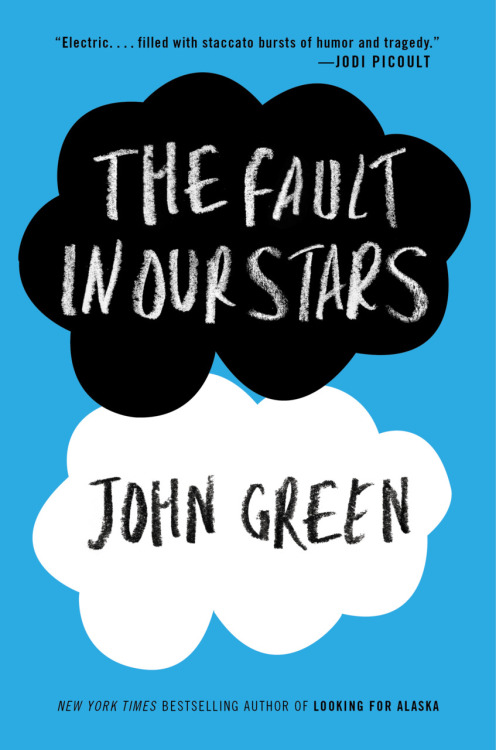 In which I express my disappointment with the beloved John Green's latest novel and receive worldwide scorn (or would, if anyone read this blog).
I owe Jon for this post since I originally wrote it as a comment on his blog. Some minor editing has been performed.
First, let me say this: I love John Green's writing. I like that it's funny and smart and doesn't treat teenagers like they're all horny morons who do nothing but play video games or pine over Hollywood actors. He has what I believe is a perfect grasp on male friendships. I could go on, but all of the above has been said before and you're reading this for the criticism, not the praise. I know what you want.
As for The Fault in Our Stars, I thought Green's intelligence (and ego) got in the way of the story. This manifests itself most egregiously in his main characters' dialogue, which I found completely unbelievable. Even if you accept that Gus and Hazel possess expansive vocabularies (and I don't accept that in the case of Gus, who is a stud basketball player, plays a lot of video games, and reads the literary equivalent of fast food), I don't know any teenagers whose every conversation drips with metaphor, irony, and witty rejoinders.
Secondly, as he does in all of his books, but especially in this one, Green sacrifices story on the altars of theme, metaphor, and symbolism. It's almost as if he's writing in the hopes of impressing high school English teachers enough to use his book in place of the dusty classics. This one was so full of metaphor that it became impossible for me to read about the smallest detail without wondering what hidden meaning I was missing. I felt like I was in eleventh grade again, with Mrs. Rief prodding me to notice the symbolism on every page. A piece of playground equipment isn't just a piece of playground equipment. Kissing at the Anne Frank Museum isn't just two horny kids kissing. Stuff falling out of trees into a Holland river is probably more than just nice imagery. And even if it isn't, there is so much metaphor and symbolism and theme that you think it must be. It pulled me out of the story (what little story there was) time and again.
As a result, I didn't feel the emotion I know Green intended me to feel. It's hard to fall for the characters when Green insists on asserting himself with such attention-seeking regularity. Whenever I began to get sucked into the story, there was Green, pants off and waving them in the air, to remind me that he--HE--had written this. And wasn't it so damn full of MEANING?
Also, I found the references to the "genius" of Peter Van Houten off-putting, since he was invented by Green. Nothing says massive ego like having your characters gush about the genius of the words of another character you created. Disagree? Try this on for size:
"There are two kinds of people in this world," Lester said. "The kind that stop for a raccoon crossing the road and the kind that swerve to hit it."
Billy was speechless. He had never heard such truth spoken so eloquently.
Gagging yet? Unless I'm mistaken, Hermione and Harry didn't sit around talking about how wise professor Dumbledore was. Rowling let the reader make that conclusion. Possibly because she didn't feel the need to remind her readers how flipping smart she was every fifth page.
SPOILER ALERT:
And speaking of Van Houten, his reappearance at the funeral was something out of a bad movie and an editor never would have let a rookie author get away with it.
END OF SPOILER.
On the other hand, there are things to recommend the novel. Much of the writing, while self-aware and overdone, is gorgeous. And Green excels where it counts most: in telling the truth. I've never had cancer, but the way his characters handle it-their thoughts, reactions, fears, hopes, etc.--felt authentic to me. And it's balls-to-the-wall ambitious to tackle the topic of teenagers with cancer in the first place. One might argue that it takes a certain amount of ego to even think you can pull it off, and one would be right. Nevertheless, I admire authors who are ambitious, even if they fail. Perhaps because they fail. And for kids who have or have had cancer, the book is probably a comfort and might even be profound. If that's the case, and from what I've seen online it is, then despite its many faults, I'm glad John Green wrote it. My opinion isn't worth much when compared to a fifteen-year-old kid going through chemotherapy.
Monday, February 13, 2012
Glen's Superpower
 I've heard it said that everyone has a superpower. Glen's was sharpening pencils. He was the best I've ever seen. He knew it too. How couldn't he? There came a time in that year, 2004 I think it was, that the rest of the class simply gave up on doing it themselves. Whenever their pencils got dull or broke or a new one was needed, they brought it to Glen. And I let them. It was an arrangement that worked for everyone. The student got his or her pencil sharpened quickly and without hassle. Glen got to do what he loved to do. And I didn't have to sharpen any pencils myself or put up with the incessant grinding associated with repeated failures.
Glen had a method. He told it to me once, explaining it with the same level of passion experts in other, more respected fields possess. He did this over coffee during an afternoon recess. He wouldn't tell me anything without the coffee.
You stick the pencil all the way in and hold it firm, Glen said. Firm, he repeated. Grip it close to the entry hole, leaving only enough space to account for the pencil being drawn in by the spinning blades. Never let it spin. He took a drink. Letting it spin was a rookie mistake. Did I understand?
I said I did.
A pencil that spun got an uneven cut. You'd end up with one good side, the lead nice and sharp, and at first glance you'd think you did it. But turn that pencil just a little and you'd see the lead on the other side still covered with wood. So hold it firm, let the blades do their job. Glen drank more coffee.
There was something else I needed to know. Something important. Something attitudinal, not technical.
You had to show the sharpener who was boss.
Not only did you hold that pencil firm and not let the blades turn it on you, you pushed in as you sharpened. You fed the blades the pencil. Not too hard, that could break the point off, but steady, forceful. It was the left hand, Glen insisted, that did the work. True, the right hand was the one that was moving, rotating the handle around and around. But like any great magician, Glen said, the real business was done where those in the audience rarely thought to look. There was technique in the handle turn, easy and consistent, not too fast, not too slow, but it was what you did with that left hand that made all the difference.
And then Glen leaned close to me. He checked behind him. And he told me the difference between a good pencil sharpener and a great one, one who got it right every time.
The secret, he whispered, the thing he never told anyone else, was knowing when to stop. Most kids stopped any old time. For them, it was like chewing food or brushing their teeth. They did it for awhile and when they felt like they'd done it for long enough they quit. But if you sharpened a pencil too long you could break the lead all over again. And if you stopped too early, it was almost impossible to pick up where you left off.
So how did Glen know when to stop?
He listened. A sharp pencil made a different sound than an dull or nearly sharp one. And when you heard the change you stopped immediately. You pulled the pencil free, and it was perfect. Glen always heard the change.
I asked him to describe it to me, those sounds, the difference between done and not done, perfect and something quite not. But Glen only smiled and told me you either heard it or you didn't. And then he thanked me for the coffee and went outside.
Friday, February 10, 2012
The Books I Read in 2011
- The Gone-Away World
- Wired
- The Dead Zone
- Miss Peregrine's Home for Peculiar Children
- Moonwalking with Einstein
- Live Wire
- 11/22/63
- Those Guys Have All the Fun
- Three and Out
- A Feast for Crows
- Characters and Viewpoint
- A Storm of Swords
- Outliers
- The Emerald Atlas
- The Schwa Was Here
- Promise Me
- Live From New York: An Uncensored History of SNL
- The Girl Who Circumnavigated Fairyland in a Ship of Her Own Making
- Guys Read: Funny Business
- The Rise and Fall of Mount Majestic
- How Lamar's Bad Prank Won a Bubba-Sized Trophy
- Darkest Fear
- A Clash of Kings
- The Final Detail
- A Game of Thrones
- The Ghostwriter Secret
- Another Whole Nother Story
- One False Move
- The Lemonade War
- A Whole Nother Story
- Back Spin
- Hoot
- Fight Club
- Fade Away
- Diary of a Wimpy Kid: The Ugly Truth
- Less Than Zero
- Drop Shot
- Deal Breaker
- A Tale Dark and Grimm
- Moonlight Mile
- Fabelhaven
- Buried Fire
- The Confession
- Alice's Adventures in Wonderland
- Unbroken
- Water for Elephants
- The End
- The Penultimate Peril
- The Grim Grotto
- The Male Brain
- The Slippery Slope
- The Carnivorous Carnival
- The Hostile Hospital
- The Vile Village
- The Ersatz Elevator
- The Austere Academy
- The Miserable Mill
- The Wide Window
- The Reptile Room
- The Bad Beginning
- Harry Potter and the Deathly Hallows
- Harry Potter and the Half-Blood Prince
- Harry Potter and the Order of the Phoenix
- Harry Potter and the Goblet of Fire
- Harry Potter and the Prisoner of Azkaban
- Harry Potter and the Chamber of Secrets
- Harry Potter and the Sorcerer's Stone
Thursday, December 22, 2011
A Remarkable Bug

I’m sitting in the hot tub when I see the mosquito. Course, I don’t know it’s a mosquito, not yet. Just a Bug, capitalized, because unless you’re a farmer or one of those starving kids in Africa, a Bug, even one of the good ones, is always capitalized. You can’t ignore a Bug.
You really can’t ignore it when the damn thing insists on dancing in the air a foot above the water, right about where your feet are. I kick, thinking the hot water might scare it off, maybe even burn it if Bugs burn like that. And besides, I can’t do much else. My hands are busy holding the Kindle, because I can’t just soak in the tub, stare at the walls, close my eyes, relax. Blame the culture or whatever, but I’ve got to be Doing Something.
I hid it, too. Had to walk past Gwen on the way out here, her on the couch, me burying the Kindle in the folds of a bathroom towel because I’ve finally given up the paperback I’ve been slogging my way through, fifteen minutes a pop.
“You taking that in the hot tub?” she’d say if she saw, all accusation, all that’s-a-stupid-thing-to-do, all knowing-more-about-it-than-I-do, like how even if I don’t drop it, which I probably will, the moisture will worm its way into the thing’s innards and corrode the motherboard or whatever makes it work. “Seems like a big risk.” Gwen with that look.
I can see how it’ll happen, me with my tasty winter skin showing. I can see it clearly: The Bug making its move, probably coming in from a blind spot, humming in my ear like these goddam mosquitoes—because I’ve convinced myself that’s what it is—do. And me reacting: flaring up a hand to swat at it, the two of us, man versus mosquito, engaged in the ancient battle, only this time with a Kindle in my hand that will surely fall all the way to the bottom of the hot tub and be ruined forever, and my wife, even though she never saw it (She didn’t, did she?), will win the argument without saying a word, which is the worst way to lose one.
Where did it go, anyway?
Not flitting around over the water anymore. Maybe I scared it off with the splashing. I came out here to read…
But it could be on my shoulder, its light touch masked by the rivulets of water, slurping out an evening snack. Better check.
Nothing.
And just what is a mosquito doing out here anyway? It’s February, 23 degrees in this screened-in room, and cold for months now. Shouldn’t all the mosquitoes be dead? Don’t Bugs need warm weather? Don’t they only live for a few days in the first place? What’s it been feeding on? Not even the cat comes out in the winter.
No, it can’t be a mosquito. Something else then, some winter bug. They must exist.
Ah, there it is, on the bottom step that leads to the tub, not four feet away. It’s a big thing, stilts for legs, a little pale itself, and slow, like it used all its energy with its brief fly-by and now it’s gathering strength for the next lift off. Tiptoeing on those six spindles, moving closer, inch by inch.
Probably hasn’t fed in a long time. Probably smells my blood pumping under all this flabby skin and over-chlorinated water. And why not? If I were starving, wouldn’t I detect the aroma of a freshly grilled hamburger, even while standing on a mountain of trash?
The Bug shouldn’t be here. Improbable at the very least, impossible more likely. Which is why I can’t get back to reading. Definitely a mosquito. A survivor. Just two feet away and probably starving, has to be near death, while I’m sitting in a hot tub that I climbed into as soon as I took off my sweatshirt, on the off chance that the neighbors might be looking.
And now I can’t even read the Kindle I risked so much to bring out here.
Quite a mosquito, when you think about it. Remarkable, really. Defying the laws of nature and all that other stuff people say about things they don’t understand.
So I hang my arm over the side, drape it there, the beaded water on the fiberglass cold where it’s been exposed to the air. That same air this Bug has somehow survived.
Go ahead, fella, have a taste. Just this once. You deserve it. We’ll resume our war in the summer, the season for battles. We’ll continue when you make sense.
I wait, the Kindle held above the water in my other hand.
And wait some more, but it makes no move, so I lean closer, putting my hand down right next to it. But instead of diving in, instead of plunging that needle, instead of feeding, it takes off, winging up into the rafters.
It’s hard to read when your mind’s on other things, so I turn the Kindle off, and climb out of the tub. I stand there in my dripping shorts, bare skin gleaming and available, plenty to go around, giving the Bug, capitalized, one more chance that it doesn’t take.
Sunday, August 28, 2011
Yes, Mom, I Have Been Writing
Okay, so not writing novels or short stories or things that will further the likelihood of getting published, but I HAVE been writing. And I'm sure you want to read it. Why else would you be hanging out here other than to read my inspirational words. So, here's what I've been doing:
1. I started a new blog, but it's all secretive because it's about WORK. Well, it's really more about EDUCATION. It's a blog where I talk about all the stupid things the state of Michigan is doing to education and how most of them will lead to, if not outright failure, a host of unintended consequences, some of which aren't that terrible (maybe even needed), but most of which will do nothing to improve education. It's political and opinionated and maybe even controversial, which means I have to keep my identity a secret. The problem is it's hard to get readers when you're a secret.
2. I've been writing things for the junk I'm selling on ebay. It struck me soon after I started my buying binge of Harry Potter action figures that the descriptions people right are dead boring. So I try to make mine not. Here are a few for items I have listed. Read them. Then, go buy my stuff.
You are bidding on an awesome Nutcracker Ornament, perfect for hanging in a prominent position on your Christmas tree or displaying on a shelf with other Nutcrackers where he will probably frighten the others because this Nutcracker is fierce. In fact, I have had to store him in his original box for 50 weeks of the year because if he's not hanging from the tree he rampages throughout the house, terrifying my cat, Captain Crunch, raiding the pantry for bags of Funyans, and howling at passersby. Curiously, he has never cracked a single nut. Be warned, therefore, that should you win this bad-ass you will have to keep him locked away in his box or displayed somewhere high, as he is scared of heights. Good luck, I think.
_______________________________________________________
Love S'mores but hate breathing in the noxious fumes of a bonfire? Or perhaps you love S'mores and bonfires but don't like people and would rather just eat your S'more in peace and quiet from the comfort of your own basement couch while playing World of Warcraft on your bad-ass computer. Or maybe you suck at starting fires, like my Uncle Glen, and don't want to go through all that rigmarole and embarrassment just for a delicious treat. Whatever the reason, we all sometimes just want to be able to make a S'more in a microwave and NOW YOU CAN!
This Micro S'mores S'more-maker comes new in the box. It has literally NEVER BEEN OPENED or used in anyway whatsoever. For example, I did not take the S'more maker out and dance with it or sing it songs or pet it lovingly. Really, I didn't do those things. Box comes with a "As Seen on TV" logo for those who like that sort of thing. Also comes with a recipe book for those morons who don't know how to make a friggin' S'more.
__________________________________________________________
You are bidding on a Wells Fargo & Co. Express sign. This is a reproduction made by Ande Rooney, who is not that annoying old dude on 60 Minutes who's always whining about magazine inserts or the price of women's stockings or whatever. This sign is metal with porcelain enamel to make it look extra awesome. Yeah, there are real signs out there that you can spend too much money on (one looking just like this one recently sold for $72 bucks on ebay) and then your wife would be all this and that, or you can buy this sign, tell people it's the real thing, and have a better marriage and a few extra dollars. You choose.
This is perfect for the father who wants to add a little verisimilitude to his son's train set. Hell, you could probably even tell the little tyke that it's the real thing, straight out of whatever station at the turn of the century or whenever Wells Fargo was a big deal.
___________________________________________________
You are bidding on an Iroquois Beer and Ale reproduced sign by Ande Rooney. The sign is good quality and in very good condition. It's metal with porcelain enamel. I've never had an Iroquois Beer but I bet it's awesome. After all, it's named after the most bad-ass Indians to ever live. The Iroquois took no shit.
And neither should you. That's why you should buy this sign and display it boldly right on the front of your house to let people know you mean business, man. Let's face it, it takes a special kind of person in these pansy-assed politically correct times to display a sign that uses the likeness of an American Indian to sell beer. The value of this sign is probably priceless because there's no way in hell a beer company is ever going to get away with this again. Their lawyers wouldn't even let them bring up the idea in a marketing brainstorming session.
Be a rebel. Buy a sign with an Indian selling beer on it. And when you hang it on your porch, go stand in the road, admire it and the balls you had to display it, and, with your arm raised high in defiance of our grovelling culture, do the Tomahawk Chop. For just a second, you may feel like you're back in the America you grew up in--the racist, exploitative one where Indians could be used to sell just about anything.
1. I started a new blog, but it's all secretive because it's about WORK. Well, it's really more about EDUCATION. It's a blog where I talk about all the stupid things the state of Michigan is doing to education and how most of them will lead to, if not outright failure, a host of unintended consequences, some of which aren't that terrible (maybe even needed), but most of which will do nothing to improve education. It's political and opinionated and maybe even controversial, which means I have to keep my identity a secret. The problem is it's hard to get readers when you're a secret.
2. I've been writing things for the junk I'm selling on ebay. It struck me soon after I started my buying binge of Harry Potter action figures that the descriptions people right are dead boring. So I try to make mine not. Here are a few for items I have listed. Read them. Then, go buy my stuff.
You are bidding on an awesome Nutcracker Ornament, perfect for hanging in a prominent position on your Christmas tree or displaying on a shelf with other Nutcrackers where he will probably frighten the others because this Nutcracker is fierce. In fact, I have had to store him in his original box for 50 weeks of the year because if he's not hanging from the tree he rampages throughout the house, terrifying my cat, Captain Crunch, raiding the pantry for bags of Funyans, and howling at passersby. Curiously, he has never cracked a single nut. Be warned, therefore, that should you win this bad-ass you will have to keep him locked away in his box or displayed somewhere high, as he is scared of heights. Good luck, I think.
_______________________________________________________
Love S'mores but hate breathing in the noxious fumes of a bonfire? Or perhaps you love S'mores and bonfires but don't like people and would rather just eat your S'more in peace and quiet from the comfort of your own basement couch while playing World of Warcraft on your bad-ass computer. Or maybe you suck at starting fires, like my Uncle Glen, and don't want to go through all that rigmarole and embarrassment just for a delicious treat. Whatever the reason, we all sometimes just want to be able to make a S'more in a microwave and NOW YOU CAN!
This Micro S'mores S'more-maker comes new in the box. It has literally NEVER BEEN OPENED or used in anyway whatsoever. For example, I did not take the S'more maker out and dance with it or sing it songs or pet it lovingly. Really, I didn't do those things. Box comes with a "As Seen on TV" logo for those who like that sort of thing. Also comes with a recipe book for those morons who don't know how to make a friggin' S'more.
__________________________________________________________
You are bidding on a Wells Fargo & Co. Express sign. This is a reproduction made by Ande Rooney, who is not that annoying old dude on 60 Minutes who's always whining about magazine inserts or the price of women's stockings or whatever. This sign is metal with porcelain enamel to make it look extra awesome. Yeah, there are real signs out there that you can spend too much money on (one looking just like this one recently sold for $72 bucks on ebay) and then your wife would be all this and that, or you can buy this sign, tell people it's the real thing, and have a better marriage and a few extra dollars. You choose.
This is perfect for the father who wants to add a little verisimilitude to his son's train set. Hell, you could probably even tell the little tyke that it's the real thing, straight out of whatever station at the turn of the century or whenever Wells Fargo was a big deal.
___________________________________________________
You are bidding on an Iroquois Beer and Ale reproduced sign by Ande Rooney. The sign is good quality and in very good condition. It's metal with porcelain enamel. I've never had an Iroquois Beer but I bet it's awesome. After all, it's named after the most bad-ass Indians to ever live. The Iroquois took no shit.
And neither should you. That's why you should buy this sign and display it boldly right on the front of your house to let people know you mean business, man. Let's face it, it takes a special kind of person in these pansy-assed politically correct times to display a sign that uses the likeness of an American Indian to sell beer. The value of this sign is probably priceless because there's no way in hell a beer company is ever going to get away with this again. Their lawyers wouldn't even let them bring up the idea in a marketing brainstorming session.
Be a rebel. Buy a sign with an Indian selling beer on it. And when you hang it on your porch, go stand in the road, admire it and the balls you had to display it, and, with your arm raised high in defiance of our grovelling culture, do the Tomahawk Chop. For just a second, you may feel like you're back in the America you grew up in--the racist, exploitative one where Indians could be used to sell just about anything.
Friday, July 29, 2011
Plot Problems in Barbie in a Mermaid Tale

Little One loves mermaids and Barbie right now, so this is the kind of stuff she wants to read at bedtime. The Wife doesn't like it when I point out plot problems in front of her, so you're stuck with it. Lucky you.
I'll limit myself to the first few pages so as to avoid Random House's wrath. My comments are in blue:
Merliah Summers smiled as she rode the waves. Ever since she was a little girl, Merliah had been able to swim like a fish. Now she was one of the best surfers in Malibu. As Merliah surfed, she thought everything was perfect--until she noticed her hair. It was turning bright pink!
What the hell is she doing looking at her hair while she's surfing? Is this the secret to becoming "one of the best surfers in Malibu?" And wouldn't pink hair make things even more perfect?
Shocked and embarrassed, Merliah wiped out and dove below the waves. I'm guessing she wiped out because she was staring at her hair instead of the waves or the board or the horizon or whatever it is surfers look at, not because she was embarrassed. When I'm embarrassed, I don't lose my balance. To her amazement, she found that she could breathe underwater! Even more amazing than pink hair? And wouldn't the gills be embarrassing?
"Merliah?" someone said. A sparkly pink dolphin was talking to her! "My name is Zuma. I am a friend of your mother, Calissa. She is the mermaid queen of Oceana--but she needs your help!"
You'd think the queen of Oceana would have a better way of getting in touch with her daughter than turning her hair pink so that she would fall into the ocean and meet up with a pink dolphin. And what, the queen too busy to come see the daughter she abandoned in Malibu herself? Mom of the Year.
Merliah couldn't believe that her mother was a magical mermaid--and that she was half mermaid herself! I admit, such news would be surprising. Although, considering the drastic change in appearance and the ability to breathe underwater, she couldn't have been that surprised. And speaking of which, if Merliah is half mermaid, shouldn't she have always been able to breathe underwater? Given her status as one of the "best surfers in Malibu," how has she never noticed this before? Are we to believe she's never been submerged in water, despite being able to "swim like a fish" ever since she was a little girl?
Merliah learned that when she was a baby, her mother's wicked sister, Eris, had taken over Oceana. Wouldn't that make Eris the queen of Oceana then? The fortune-telling Destinies had foretold that Merliah would one day defeat Eris. So to protect her baby daughter, Calissa had sent Merliah to live with her human grandfather in Malibu.
And now she's leaving her in the flippers of a pink dolphin? No wonder she lost the throne. I might argue that Oceana is better off with Eris calling the shots. Unless the pink dolphin has supernatural powers...Wait a minute...the dolphin is sparkly...hmmm...you don't think?...

Vampire dolphin. Nevermind. I take back every criticism.
Friday, July 1, 2011
Reminding the Reader--a Technique
Note: I've got a story up on The Alchemy of Writing today (Thanks, Bryan).You should read it, find something to criticize, comment, and then I'll vigorously defend whatever you criticize and we can turn it into an all-out flame war. It'll be fun.
And now a writerly post:
I've been working by way through Harlan Coben's Myron Bolitar books and just finished Promise Me. He uses an interesting technique at one point in the book that I don't remember seeing before. His main character, Myron, is listening to a voicemail. The voicemail refers to an event that happened earlier in the book, early enough that the reader has most likely forgotten about it (as I had). So Coben needs to remind the reader what's going on. Here's how he does it:
Clever, huh? Not only does the distraction allow Coben to slip in the reminder, but it also strikes me as real. I've been disrupted while leaving a message quite a few times. The downside? I couldn't help wonder whether or not the distraction was important to the story. Was Berruti in some kind of danger? It took a few more sentences for me to realize that Coben only used it so he could slip in the reminder.
And now a writerly post:
I've been working by way through Harlan Coben's Myron Bolitar books and just finished Promise Me. He uses an interesting technique at one point in the book that I don't remember seeing before. His main character, Myron, is listening to a voicemail. The voicemail refers to an event that happened earlier in the book, early enough that the reader has most likely forgotten about it (as I had). So Coben needs to remind the reader what's going on. Here's how he does it:
Myron got into his car and checked his cell phone. One new message. He listened to it.
"Myron? Gail Berruti here. That call you asked about, the one that came to the residence of Erik Biel." There was a noise behind her. "What? Damn, hold on a second."
Myron did. This was the call Claire had received from the robotic voice telling her that Aimee "is fine." A few seconds later, Berruti was back.
"Sorry about that. Where was I? Right, okay, here it is. The call was placed from a pay phone in New York City..."
Clever, huh? Not only does the distraction allow Coben to slip in the reminder, but it also strikes me as real. I've been disrupted while leaving a message quite a few times. The downside? I couldn't help wonder whether or not the distraction was important to the story. Was Berruti in some kind of danger? It took a few more sentences for me to realize that Coben only used it so he could slip in the reminder.
Tuesday, June 21, 2011
Monday, June 13, 2011
Writing for the "Right" Age
A few days ago Corey wrote about an exercise she was asked to do at the 2009 Rutgers conference. The panel leader asked the attendees to write their names and what age they felt inside. The point was that whatever age you feel inside should be the age you write for. It's cute and a little clever and maybe even somewhat useful, but I think mostly it's nonsense.
As writers, we traffic in the truth and this exercise strikes me as being largely untruthful.
Because the truth is, none of us feel the same age inside all the time. Or even most of the time. In two weeks, when I get together with some of my college buddies, I will feel (and probably behave) like a twenty-one year old, complete with lewd remarks I'd never make in the presence of my wife and more adult beverage consumption than I'll engage in the rest of the year.
Yesterday, when I tried to run three miles and gave up because my legs got sore around the 1.5 mile mark, I felt more like a forty-five-year old.
When I got on a bike last week for the first time since probably middle school I felt a lot like I felt when I was first learning to ride--nervous, cautious, embarrassed, and awkward. (And my butt hurt as if it had the padding of a person much younger as well)
When I learned my mom got cancer and then when she had open heart surgery I wrestled with the fears of a six-year-old.
On snow days I feel eleven.
And when I walk into a high school gym, memories of my own basketball playing days wash over me and I feel, if only for a fleeting moment, like I am seventeen again.
I think the better advice is this: for whatever age you are writing, you ought to be able to take yourself back in time and remember what it was like to be six, or eleven, or seventeen, or forty-five. And if you need to play a certain song, or recall a certain memory, or visit a certain place in order to do that, then go right ahead. It shouldn't be too hard. In fact, it's probably the most natural thing in the world.
As writers, we traffic in the truth and this exercise strikes me as being largely untruthful.
Because the truth is, none of us feel the same age inside all the time. Or even most of the time. In two weeks, when I get together with some of my college buddies, I will feel (and probably behave) like a twenty-one year old, complete with lewd remarks I'd never make in the presence of my wife and more adult beverage consumption than I'll engage in the rest of the year.
Yesterday, when I tried to run three miles and gave up because my legs got sore around the 1.5 mile mark, I felt more like a forty-five-year old.
When I got on a bike last week for the first time since probably middle school I felt a lot like I felt when I was first learning to ride--nervous, cautious, embarrassed, and awkward. (And my butt hurt as if it had the padding of a person much younger as well)
When I learned my mom got cancer and then when she had open heart surgery I wrestled with the fears of a six-year-old.
On snow days I feel eleven.
And when I walk into a high school gym, memories of my own basketball playing days wash over me and I feel, if only for a fleeting moment, like I am seventeen again.
I think the better advice is this: for whatever age you are writing, you ought to be able to take yourself back in time and remember what it was like to be six, or eleven, or seventeen, or forty-five. And if you need to play a certain song, or recall a certain memory, or visit a certain place in order to do that, then go right ahead. It shouldn't be too hard. In fact, it's probably the most natural thing in the world.
Monday, June 6, 2011
The Baker's Assistant, A Short Story for Kids
The line outside the bakery was twenty people long and the bakery hadn't even opened. Inside, Chef Sprocket, the baker, opened a cupboard to take down his ingredients. He snatched the bag of sugar. He pulled down the cinnamon. He grabbed the chocolate chips. But when Chef Sprocket went to hoist the huge sack of flour from the shelf, there was no sack of flour to hoist.
"VHAIR IS ME FLOUR?" he hollered.
Sven, the chef's assistant, ran into the kitchen. "What is the problem, Master Sprocket?"
"ME FLOUR! IZ GONE!"
Sven glanced out the window at the growing throng. How would they ever serve all those people if they didn't have flour? "I will go get some," he told the baker, and he rushed out the back door. He jumped on his bike and rode to the supermarket. But when he got inside he was dismayed to see that they too were out of flour. "How can this be?" Sven asked, but there was no time to waste complaining to the manager. He got back on his bike.
Sven could think of only one other place where he could get flour--McCready's Bakery, Chef Sprocket's only competition in the pastry field. Sven swallowed. McCready was a hard man who made his desire to crush Chef Sprocket no secret. Still, what choice did Sven have?
McCready's was already open and busy by the time he got there. The smell of donuts, biscuits, and cakes filled his nose. In his haste, Sven had forgotten to eat breakfast. He was very hungry. And if he bought some pastries, perhaps McCready would be more willing to help.
"I'll have a raspberry-filled donut and a buttermilk biscuit," he told the clerk. He ate the donut while he waited for Chef McCready. The biscuit he put in his pocket for later.
"What do you want?" McCready snapped when he saw Sven. The pastry chef was a tall, thin man with an oily mustache. He wore a pillowy white hat on his head.
Sven said, "Um...uh...see..." And then, in an unbroken string of words, "We've-run-out-of-flour-at-Sprocket's-and-the-supermarket-has-run-out-and-so-I'd-like-to-buy-some-off-you."
McCready smiled. "Why should I sell you my flour? I need it for my own pastries."
"But surely you have some to spare."
McCready's smile grew brighter. "Surely," he said. Then, "The answer is no. Now get out of my bakery."
Sven thought he might cry. He imagined what Chef Sprocket would say when he returned with no flour. He'd probably get fired.
Because tears had puddled in his eyes, he almost missed the sign by the driveway. "The Gilberts" was written in script on a wooden arrow that pointed toward a small house. The name sounded familiar...
The Gilberts! Of course! As in Helen Gilbert. Sven had seen her picture in the newspaper just last week. She'd won the annual pie baking contest at the county fair. He remembered because Chef Sprocket had seen him reading the article and shouted, "PUT ZAT DOWN! ZROW IT AVAY! IZ MY RECIPE. ZAT VOMAN STOLE IT!"
Any lady who had won the fair's pie baking contest would have to have flour in her kitchen. Sven leaned his bike against a telephone poll and approached the house. He pressed the doorbell. No one came. He rang again, but still, no one answered.
He was about to leave when he had an idea--a bad idea. He could break in. It wouldn't really be stealing. He'd take the flour and then come back in a few days and explain the whole thing. He'd give her twice what he took.
Sven tried the doorknob. Locked. But at the bottom of the door there was a square, leather flap. A doggie door. Sven was a tiny man. He got on his knees and stuck his head through. The coast was clear. He crawled inside. The house was quiet. Maybe Mrs. Gilbert had taken her dog to the vet. If that was the case, he'd better hurry.
Sven threw open the cupboard doors and immediately spotted a bag of flour. But as he reached for it, his hand froze in mid-air at the sound behind him.
GRRRRRRRRRR
Sven turned slowly. A vicious looking Rottweiler was glaring at him.
"Good doggie," Sven said. "Good doggie."
GRRRRRRRRRR. Drool dripped from the dog's muzzle.
Sven looked for a place to run or hide or something to hit the dog over the head with. He found nothing. The dog attacked. Sven through up his arm to protect himself, but the dog bit him in the pocket.
He had forgotten about the biscuit. Quickly, Sven pulled the biscuit out and threw it down a hallway. The dog scampered off. When it did, Sven bolted for the door.
It was hopeless. He'd been gone at least an hour. Dejected, he rode back to Sprocket's. Sven was so upset when he got there that he didn't notice the line had disappeared. He walked into a bakery that was buzzing with happy people eating pastries.
"VHAIR YOU ARE! bellowed Chef Sprocket.
"What has happened?" asked a very confused Sven.
"I forget. I order more flour yesterday. The truck vhas late." The Chef shook his head. So did Sven. "Here,"Chef Sprocket said, "Have a biscuit."
Thursday, June 2, 2011
Jerry and His Smelly Donkey, a Short Story for Kids
 Jerry owned a donkey, and every couple of weeks, after he'd grown bored of a place, he would strap his bundle of stuff to the back of his donkey and head out for the open road.
"Move faster, donkey!" Jerry would yell.
"You're so lazy!" Jerry would shout.
"And you smell like rotten pickles!"
Jerry was tired of his donkey. He thought he might finally be ready to settle down, get a job, and buy a house. And if you own a house, you don't really need a donkey.
Forest Springs seemed like a nice place to live. The trees had leaves. People obeyed traffic laws. Children rode bikes. One child zipped past Jerry and his donkey. "Peeuuwww! That is one stinky mule!" he said. So maybe the schools weren't the greatest.
There was a man selling peanuts at the side of the road. "Would you like to buy my donkey?" Jerry asked him when the man had finished shouting about how his peanuts were "fresh-roasted."
The peanut vendor looked at the donkey. He wrinkled his nose. "I don't want your donkey, man. That thing smells like sweaty socks."
Jerry tried to sell his donkey to six other people, but none of them wanted it either. He came up with a new plan. Instead of selling the donkey, he would just give it away. Who wouldn't want a free donkey? He chuckled at his own cleverness. "Pretty soon," Jerry said, "I'll be rid of you, my slow, malodorous friend."
It wasn't long before he came upon a beggar huddled under a blanket in a dirty alley. "Can you spare some change, brother?" the beggar said.
"No, I cannot," Jerry answered. "I don't have two pennies to rub together, but I can give you this donkey."
The beggar scowled. "That old thing? It smells like my armpits. It's bad enough I got to live with my stinky armpits, I don't need no smelly donkey to add to it."
Jerry tried to give his donkey away to a little girl, a lonely widow, and the zoo, but none of them wanted the animal. "You see how worthless you are, donkey? Not even a lonely old woman wants you. I ought to leave you right here at the side of the road."
That was it! He didn't need to sell the donkey or give it away, he could just abandon it! Jerry climbed off the smelly donkey and grabbed his bundle of belongings. "See you later, donkey," he said, and then added, "Actually, that's not true. I plan on never seeing, or smelling, you again." As Jerry strolled off toward the center of town, the donkey stood there stupidly, not knowing what to do.
Jerry soon found what he was looking for, a person who needed a roommate. He moved in to a tiny apartment on Main Street. But Jerry was so used to the open air that he felt cramped in the small space. The apartment was tiny and his roommate was a slob.
"Pick up your stuff, you slob!" Jerry scolded the man. "What do you need so much stuff for anyway?" They had a fight and Jerry's new roommate threw him out.
"And take your stupid bundle with you!" he said.
Jerry tried other places, but no one wanted him. Some people said he smelled a little like a donkey. He decided to go back to his old life. He slung his bundle of stuff over his shoulder and started walking. It was a long way to the next town.
The night was growing dark and his legs were sore, so he stopped to sit at the side of the dusty road. And as he did he smelled something on the wind. It smelled a little like rotten pickles. The scent reminded him of sweaty socks. It was redolent of the armpits of a homeless beggar. It smelled like Jerry's donkey, and it smelled wonderful.
Saturday, May 28, 2011
On Tenure, LIFO, and Paying for Years of Service
WARNING: Serious teacher post ahead.
There's been a lot of talk lately about reforming (or even getting rid of) tenure in the public school system. Critics say it makes it virtually impossible for districts to fire bad teachers. Another argument is that it grants teachers more job protection than anyone else in our economy. Less talked about are the related issues of LIFO* (last in, first out) and basing teachers' salaries on their years of service. In Michigan, and in many other places across the nation, all of these under attack.
I'm not going to trot out all the usual defenses of these practices. What I will do is offer a glimpse of what would happen if they disappeared.
What critics will say is that teachers should be treated like any other employee. They should be rewarded for good performance and penalized when they're ineffective. No one wants a great teacher laid off just because she's young. Teacher pay should be based on effectiveness, not seniority. These sound like reasonable arguments. But in actual practice, tenure, LIFO, and paying teachers based on years of service provide certainty to districts and consistency to communities.
Changing the current system will lead to unintended consequences. The legislature would essentially be turning every teacher in the state into free agents. Without the job protection tenure affords (granted after four years in Michigan), teachers just starting out their careers (unmarried, mobile, embracing change) could hop from district to district looking for the right fit. Without the incentive of future tenure and the yearly pay raises, there would be no reason to stay, especially for the best teachers.
If you tie teacher pay to effectiveness rather than seniority, there is nothing to keep a great teacher from leaving and looking for a better deal. Most veteran teachers I know don't even consider leaving after seven or eight years because of the hit their salaries would take when they changed districts. And which teachers would be most likely to take advantage of this new freedom? The very best ones. If you're a great teacher, why would you stay in your school if another school is willing to pay you more? And just where do you think our very best teachers would eventually end up? In the poorest districts, where they're needed most but the work would be harder and the pay less? Or in the districts who could pay them the most but probably need them the least?
Tenure, LIFO, and paying teachers based on seniority might be unpalatable, but no one can argue that it doesn't provide districts with a high degree of certainty from year to year. Right now, as districts figure out their budgets, one thing they do not have to worry about is losing half of their veteran teachers to better paying districts. And communities can count on which teachers are going to be there for their kids in the fall.
Personal Aside: I should say that as a male teacher in elementary education, these proposed changes don't terrify me. Quite the opposite. Believe me, I'd like a little more leverage. In the system described above, good teachers would be in very high demand (especially if the state actually started awarding schools for high performance) and the school system would more closely reflect the marketplace in that those teachers in the highest demand would command the highest salaries. There are very few men teaching in today's elementary schools (9 percent of teachers, actually). Given the high number of children being raised without a father at home, I think that might work to my advantage.
Another Criticism of the Criticism: Right now, schools have a much higher incentive to cut costs than they do to provide a great education. If that remains the case, it's hard to see how getting rid of tenure is going to ensure the best teachers remain in the classroom. My suspicion is that without the impediment of tenure, school districts will simply lay off the teachers who cost them the most, regardless of their effectiveness.
*"Last in, first out" is the practice school districts use for laying off teachers. Simply stated, those teachers who were hired most recently get laid off first when cuts to staff are made. Veteran teachers have virtually no fear of losing their job due to staffing cuts.
There's been a lot of talk lately about reforming (or even getting rid of) tenure in the public school system. Critics say it makes it virtually impossible for districts to fire bad teachers. Another argument is that it grants teachers more job protection than anyone else in our economy. Less talked about are the related issues of LIFO* (last in, first out) and basing teachers' salaries on their years of service. In Michigan, and in many other places across the nation, all of these under attack.
I'm not going to trot out all the usual defenses of these practices. What I will do is offer a glimpse of what would happen if they disappeared.
What critics will say is that teachers should be treated like any other employee. They should be rewarded for good performance and penalized when they're ineffective. No one wants a great teacher laid off just because she's young. Teacher pay should be based on effectiveness, not seniority. These sound like reasonable arguments. But in actual practice, tenure, LIFO, and paying teachers based on years of service provide certainty to districts and consistency to communities.
Changing the current system will lead to unintended consequences. The legislature would essentially be turning every teacher in the state into free agents. Without the job protection tenure affords (granted after four years in Michigan), teachers just starting out their careers (unmarried, mobile, embracing change) could hop from district to district looking for the right fit. Without the incentive of future tenure and the yearly pay raises, there would be no reason to stay, especially for the best teachers.
If you tie teacher pay to effectiveness rather than seniority, there is nothing to keep a great teacher from leaving and looking for a better deal. Most veteran teachers I know don't even consider leaving after seven or eight years because of the hit their salaries would take when they changed districts. And which teachers would be most likely to take advantage of this new freedom? The very best ones. If you're a great teacher, why would you stay in your school if another school is willing to pay you more? And just where do you think our very best teachers would eventually end up? In the poorest districts, where they're needed most but the work would be harder and the pay less? Or in the districts who could pay them the most but probably need them the least?
Tenure, LIFO, and paying teachers based on seniority might be unpalatable, but no one can argue that it doesn't provide districts with a high degree of certainty from year to year. Right now, as districts figure out their budgets, one thing they do not have to worry about is losing half of their veteran teachers to better paying districts. And communities can count on which teachers are going to be there for their kids in the fall.
Personal Aside: I should say that as a male teacher in elementary education, these proposed changes don't terrify me. Quite the opposite. Believe me, I'd like a little more leverage. In the system described above, good teachers would be in very high demand (especially if the state actually started awarding schools for high performance) and the school system would more closely reflect the marketplace in that those teachers in the highest demand would command the highest salaries. There are very few men teaching in today's elementary schools (9 percent of teachers, actually). Given the high number of children being raised without a father at home, I think that might work to my advantage.
Another Criticism of the Criticism: Right now, schools have a much higher incentive to cut costs than they do to provide a great education. If that remains the case, it's hard to see how getting rid of tenure is going to ensure the best teachers remain in the classroom. My suspicion is that without the impediment of tenure, school districts will simply lay off the teachers who cost them the most, regardless of their effectiveness.
*"Last in, first out" is the practice school districts use for laying off teachers. Simply stated, those teachers who were hired most recently get laid off first when cuts to staff are made. Veteran teachers have virtually no fear of losing their job due to staffing cuts.
Tuesday, May 24, 2011
A Fable, Retold

One day the animals were bored and so they decided to stage a contest. Zebra said, "I say we have a contest to see who has the most stripes!" Cow said, "I think we should battle to see who can produce the most milk!" Flamingo said, "I think we should hold a contest to see who looks best standing on one leg." And Raccoon said, "I think we should all dress up, and whichever one of us looks most like the Hamburglar should win!"
The other animals all hissed or mooed or growled or quacked or cawed or roared or whinnied or...you get the picture.
But then Cheetah strolled into the clearing and purred, "I say we race to see who is fastest."
Now Cheetah was widely regarded as the most arrogant of the animals (except for Lion, but he was always asleep) and all the other animals talked behind his back and spoke openly about their desire to knock him from his self-appointed pedestal. However, most of the animals were clever enough to realize that they stood no chance in a race against Cheetah.
"I'll do it!" proclaimed Human, who never lacked for unwarranted confidence.
"I'll do it!" blurted Hare, who wanted to make amends for that lackluster performance against the Tortoise.
"Fine. I'll do it," snapped Tortoise, after Crocodile and Chameleon goaded him into defending his title.
And so the field was set. On the appointed day, Human, Hare, Tortoise, and Cheetah all lined up at the starting line. Human thought, "I'll use my superior intellect to win." Hare thought, "I won't make the mistake of taking a nap in the middle of this race." Tortoise hoped the others would somehow disqualify themselves. And Cheetah told himself over and over, "I'm the fastest animal in the kingdom. Nobody is as fast as me. I'm awesome. I'm unbelievable. I'm so fast, I make light jealous!"
And they were off. Cheetah raced ahead of the pack, quickly disappearing over a rise. Human had hidden a pistol in his running shorts, but by the time he pulled it out and took aim, the Cheetah was out of range. He shot Hare instead. And Tortoise plodded along, inch after inch, as Human swore and Cheetah sped farther and farther away.
By the time Tortoise finally crawled over the finish line, Cheetah had already bought twelve rounds of drinks for the other animals to celebrate his victory. The animals seemed to have forgiven Cheetah his arrogance. Everybody loves a winner, especially when they buy the booze. Human was especially happy. He tried to hug Tortoise, but fell over instead.
"Congratulations," Tortoise said to Cheetah. "You are the fastest."
"I always knew I was," Cheetah said. "Slow and steady may have worked once, but it's a poor substitute for talent and confidence."
THE END
Subscribe to:
Posts (Atom)