Tuesday, April 12, 2022

What's Wrong With "Doing What's Best For Kids"


There’s a YouTube video called, “The Most Unsatisfying Video in the World ever made.” It lives up to its name. It shows people cutting tomatoes wrong, mixing M&Ms and Skittles, scraping utensils against the bottom of an empty bowl, and other cringe-worthy crimes against humanity. Each example in the video makes me reflexively recoil. It’s the visual equivalent of the many phrases in education that induce the same reaction:

“Teach with strict fidelity.”
“College and career ready.”
“Unpacking the standards.”
“Jigsaw this article.”
“Let’s put that idea in the parking lot.”

And also, “Doing What’s Best For Kids.”

I can’t tell you how many times I’ve heard someone — usually an administrator trying to make teachers feel guilty for self-advocating — say that we all just need to Do What’s Best For Kids. The phrase tends to show up during contentious contract negotiations with regularity. That’s no accident, because all too often it means, “Do what we want you to do, and if you question it, then you’re looking out for yourself instead of your students.”

Some teachers are guilty of using it, too. Questioned about why they made a certain choice, they will hide behind, “It’s What’s Best For Kids” without actually explaining why or how they know that to be true. It’s a way for anyone — teacher, parent, principal — to claim an morally superior position and send the message that their actions, unlike yours, have selfless motives. They’re doing things for the right reasons, while you may be not.

It’s almost always nonsense.

The Problem

The problem with the phrase, “Doing What’s Best For Kids” is that it can be used to justify damn near anything.

“I’m spanking my kids to teach them right from wrong.”

“I allow my son to eat whatever he wants because I want him to learn he’s responsible for his own choices.”

“We’re taking away recess because students need more time on task.”

“I’m not vaccinating my child because I don’t want her to get autism.”

The phrase, then, is meaningless. But that doesn’t mean it’s powerless. It’s an ace up the sleeve, a flag planted firmly in the high ground, and it’s intended to be a conversation stopper. People on the phrase’s receiving end are supposed to look introspectively and question their motives. They’re supposed to think: I should sacrifice more.

How can anyone argue that educators shouldn’t do what’s best for kids?

Because it’s just not that simple. In addition to the fact that Doing What’s Best For Kids can be used to justify anything, there are three other problems.

Kids Are Different

This should go without saying, but since the phrase keeps getting used, someone ought to point out that kids are different. What’s best for one is often not what’s best for another. My daughter, always a reader, needed only to be given time and books to improve as a reader as she went through school. Other students — reluctant to read and lacking basic skills — needed much more direct instruction. Examples abound:

  • Recess is great for some kids, but it’s a source of anxiety and a daily reminder of their lack of friends for others.
  • Inquiry-based science is more authentic and engaging, but some students don’t learn the content they’re supposed to.
  • Group work teaches kids to collaborate, but it also means some students do much more work (and therefore learn more) than others.

Additionally, what’s best for an individual might not be best for large groups. Ryan is continually distracting the class and making it impossible to teach. It’s certainly not best for Ryan to be kicked out of the room, but it might be best for everyone not named Ryan. Spending one-on-one time with a student will benefit her, but what about the rest of the class?

Of course, a solution to this problem is to differentiate because giving kids what they need is what’s Best For Kids. But differentiation leads to a second problem:

Beliefs Are Different

Not everyone agrees about What’s Best For Kids. That’s why we have standards. Teachers, once mostly left alone, taught whatever they thought was important. I learned about dinosaurs every year from age six to age nine (fat lot of good it did me, too). I know a former teacher who took time out of every day to have her students sing her favorite college’s fight song. Some teachers still waste class time teaching the dead art of cursive writing. All of these teachers tell themselves they’re doing What’s Best For Kids.

Many educators have diametrically oppositional philosophies about what school should even be. Should it be a place of rigorous work with the aim of producing young people who know things and can demonstrate their knowledge on tests? Should it be a place of wonder and discovery, where failure is encouraged? Should it reflect society or prepare students to shape a new, better world? Which philosophy is Best For Kids, and is that philosophy best for all kids?

Sometimes, determining what’s best is actually choosing between two benefits, in which case the determining factor is almost always something other than What’s Best for Kids. Field trips are great for kids. So is time on task in the classroom. But if you do one, you sacrifice the other. And since field trips cost money, guess which one administrators think is Best for Kids.

The Biggest Problem

But here’s my main objection to being reminded to Do What’s Best for Kids: It suggests sacrifice and that sacrifice, almost always, is supposed to come from one group of people: teachers.

Teachers, the people doing the hard work of actually educating kids, may have the only legitimate claim on the moral high ground, and yet they are often the ones accused of looking out for their own interests above those of their students. Politicians blame teachers’ unions for ignoring What’s Best For Kids, while turning a blind eye to a myriad of other problems. Administrators — people who have intentionally left the one place where they had the most direct influence on students — have the temerity to suggest to teachers — the people whose job is literally all about the kids and who have chosen to remain in that job despite stagnant pay, deteriorating working conditions, greater expectations, less autonomy, scapegoating, and being reminded to Do What’s Best For Kids — that they ought to sacrifice even more. And sanctimonious teachers wield the tired phrase to feel better about themselves, oblivious to the meaninglessness of their words but comfortable in their own moral superiority.

“Doing What’s Best For Kids” is a weapon. It’s the language of teacher-shaming. It’s manipulative. And when you hear it from an administrator, parent, policy-maker, or even a fellow teacher, prepare to be exploited. Because the insinuation behind this phrase is clear: Teaching is not your job; it’s your calling. And that calling requires you to sacrifice. It requires you to agree to whatever thing someone with more power believes is What’s Best for Kids. So sit down, shut up, sign the contract, and get back in your classroom. Go Do What’s Best For Kids. And if you can’t figure out what that is, don’t worry, someone will let you know.

The Benefits of Doing Nothing


Walk into any classroom and you are likely to see the teacher doing stuff. They’re lecturing, meeting with students, conferencing, planning, assessing, entering data, designing units, or circulating throughout the room. Few teachers give themselves permission to do nothing. But they should. Doing nothing is important.

When I say doing nothing, I of course mean doing nothing outwardly.  While it may appear that we our sitting at our desks and counting the ceiling tiles, our brains are busy at work.

The reality is that teachers don’t spend enough time thinking because we’re so busy doing.

Our Best Ideas

Our best ideas often come to us when we are idle. Before I started this blog, I was an aspiring novelist. In the course of telling a story, I’d often get stuck. I couldn’t figure out what should happen next. The worst thing I could do was think more about the problem. Usually, my best ideas came when I left the work alone and did something mindless. It’s hard to come up with great ideas when we’re under pressure to do so.

The same thing happens with teaching. I have very few innovative ideas in February. But in the summer, when my mind is rested and I’m not stressed out from long days in the classroom, I regularly come up with new things to try for the upcoming school year. Teachers need to set aside time to just sit and think.

Sitting and thinking, instead of always doing, provides teachers with the mental space to be creative. I keep a notebook where I write down things to try in the classroom, and once a month I force myself to just sit and think of stuff. Ideas can come from books, blogs, colleagues, social media, or my favorite place, left field.

Reflection

Time to think allows teachers to actually reflect on what’s working and what isn’t. We’re all told how important it is to reflect on our lessons. It’s part of every teacher evaluation system I know of. But most teachers roll their eyes and think, “Yeah, right. And when am I supposed to do that?”

They ask that question because they don’t give themselves permission to do nothing. For most teachers, the thought of their principal walking in and seeing them sitting down and staring off into space is scary. We feel like we must always be working, and we fail to realize that thinking counts.

Time to think and reflect also lets teachers revisit their vision for the classroom to see if this year’s group is still on track or if things have gone off the rails and a recommitment is necessary. Every year, I write down my personal goals and the vision I have for my room. But once caught up in the day-to-day grind, I sometimes find myself just plugging along without thinking about the big things I want my room to be about. Without time to sit and think, I lose track of where I’m supposed to be leading my students.

Time to think can also save us trouble down the road. Taking a few minutes to think instead of responding emotionally to a student’s misbehavior, or a parent’s disrespectful email, or an administrator’s new idea can mean the difference between having a job and not having one.

When Helping Doesn’t Help

Students also benefit from a teacher doing nothing. Especially at the elementary level, too many of us rush in to save a student from failure or even frustration. We don’t want our students to struggle, and when we see them doing so, we want to help. That’s how we’re built.

But failure and frustration teach, often better than we do.

Stand back. Do nothing. Send the message to your students that they can do it without you.

I can always tell if I’ve helped too much when the state test rolls around. Since I’m not allowed to help at all, those students who I’ve not allowed to struggle don’t know what to do without my assistance. They don’t know how to solve problems because I haven’t allowed them to struggle with them. I’ve failed them, not only for that test, but in some ways, for life. There won’t always be someone around to help, and some problems just require that you sit there and think.

Proof Your Teacher Evaluation Is Meaningless


It’s bad enough that part of teachers’ evaluations are based on student growth. This growth, usually based on just a few poorly designed assessments and for which students are not personally held accountable, can be affected by a number of factors completely outside the control of the teacher, such as student attendance, motivation, technical issues, and whether or not a kid remembered his glasses or whether or not mom remembered his medication on the critical day.

But even more egregious is that a large percentage of a teacher’s evaluation comes from administrator observations.

A principal is given a huge checklist of “best practices,” and is supposed to assess the teacher in real-time on each of them. They might do this a couple of times each year. Of the more than 1,000 hours that teachers do their jobs in a year, their evaluation may rest on just 80 minutes of observed teaching. In other words, a teacher’s entire year is judged on about one-tenth of one percent of her efforts.

That’s not the worst of it. Because in the case of observations, it’s not what districts are doing that proves teacher evaluations are meaningless. It’s what districts are not doing.

What Districts Won’t and Never Will Do

See if you can imagine your district doing the following:

On a day in May, say a week or two before you are to receive your end-of-year evaluation, the entire staff is invited to a one-hour professional development session. The topic is “Why Your Teacher Evaluation is Credible.” You all gather inside the high school auditorium. A huge screen is hung over the stage. In the front row sits every administrator the district employs.

The Superintendent walks to the microphone and says, “Valued educators, we know that many teachers feel stress over their evaluations. Today, we are going to alleviate some of that stress. We want you to know that the tool we use to evaluate you produces consistent results, no matter who uses it.

To prove it to you, we are all going to watch a 40-minute video of a lesson. In this case, you’ll be seeing a sixth grade social studies class. Each administrator will complete an observation–just like they do for all of you–while they watch the video. When the lesson ends, I will collect each principal’s observation and I will show them to you. That way, you will see that no matter who uses the tool it produces very similar results. You’ll know that your teacher evaluation is a true reflection of your abilities as an educator, and not the subjective result of an unproven process that encourages you to employ different strategies based solely on the whims and preferences of the person who happens to be your supervisor this year.”

At which point the video starts and the principals start tapping things on their iPads.

The fact that none of the above happens in any district I know of (and never will) tells teachers everything they need to know about the objectivity of the observations they’re forced to endure and are asked to believe in.

If you have a system that relies on the opinions and values of the individuals doing the scoring then you have a system that can’t be trusted.

Treat Teachers Like Gymnasts

Gymnastics recognizes this. Gymnastics, like teaching, is more art than science. Two people watching the same routine can honestly disagree about which was better. That’s why gymnasts are scored by multiple judges who have deep knowledge of the sport and receive rigorous training on how to evaluate routines. They’re given strict guidelines and add points for required elements and difficulty, while deducting for execution and artistry.*

And still they don’t agree. That’s why the high and low scores are thrown out and the rest are averaged. FIG recognizes that relying on the judgment of one person ruins the credibility of their sport. No viewer would trust the results of a gymnastics competition that was judged by a single person. The gymnasts wouldn’t trust those results, either.

Neither should teachers. It says something that we care more about getting it right for gymnasts than for teachers. It says something that school districts will never allow its teachers to see how subjective their administrators’ observations truly are. It says something that American teachers’ jobs are in the hands of one judge, who bases his or her evaluation on one-tenth of one percent of a teachers’ working hours.

One judge.

Better hope you don’t get the Russian.**

____________________________

* I simplified Olympic gymnastics’ scoring for ease of reading.

** I’ve got nothing against Russians, except that they cheat in the Olympics.

How Teachers Can Give Themselves a Raise


Work fewer hours.

That’s it, really. I probably don’t need to explain it, but you did click over here and you likely expect more than three words, so…

Here is how working for others… uh, works. You agree to do a job. Your employer agrees to pay you. You come to an arrangement whereby you will work for a certain amount of hours, and in return, they will give you a certain amount of money.  For teachers, the amount of work and the amount of money is almost always spelled out in black and white in a contract. For instance, mine says,

“The teacher’s normal day shall be seven (7) hours and six (6) minutes, unless permission is granted by the principal to leave earlier. Professional development half-days shall be three (3) hours and thirty (30) minutes with the start time to be determined by the building administrator.”

“Teachers shall be entitled to a duty-free uninterrupted lunch period of not less than thirty-five (35) minutes.”

And farther down the document, there’s a salary schedule that states exactly how much I will be paid for my labor.

So it’s pretty cut and dry. There’s an exchange. Work for money. Tale as old as time.

Now, when it comes down to it, we’re all hourly employees. Your investment banker friend might pull down 100K but he’s also working 60-hour weeks. So while he drives a nicer car, wears fancier clothes, and takes cooler vacations than you, he also mostly drives that car to work and back, is only seen in his fancy clothes by other bankers, and doesn’t take many vacations because he works all the damn time. He’s trading additional time for more money, and as a result, his hourly rate would be something like:

$100,000 divided by (60 hours/week x 50 weeks/year) = $30/hr + no personal life.

You, on the other hand, made a different choice. You chose time over money (or at least, that’s what I did and what you should be doing). You make a much more modest income, but you also work fewer hours (and if you don’t, you should).

If you feel like you’re underpaid as a teacher, it’s probably because of one of these reasons:

1. You’re young and pay for new teachers hasn’t moved in eons.
2. You work in Oklahoma West Virginia Arizona.
3. You work too many hours.

Let’s say you’re a mid-career teacher making $60,000. You work 10-hour days, plus you put in 10 more hours on weekends. Your hourly rate is:

$60,000 / (60 hours/week x 38 weeks) = $26.31

(And this assumes you don’t work over the summer. But if you’re working 60-hour weeks during the school year, I have a sneaking suspicion you’re not one to spend your summers on a beach, so your hourly rate will be even lower.)

If you want a raise, there are only three ways to go about getting one (short of leaving for a higher-paying job, and good luck with that).

You might work more, although you have to be careful. The math doesn’t always work in your favor. If your district is offering less than your hourly rate (which is likely), then it’s not really a raise. It’s just more work for more money, but not enough money to make it worth your while (unless you have no life and nothing better to do with your time, in which case, I’m sorry).

You can stick around for another year and get a small raise (unless they freeze steps, which is certainly a possibility, isn’t it?).

Or you can work fewer hours, which:

–boosts your hourly rate of pay.

–gives you more time to do the things you really want to do in life.

–is something you can start doing tomorrow.

So here’s how to feel richer than an investment banker:

Let’s say you’re not crazy and you don’t work 60 hours a week. You work fifty because you tell yourself it makes you a better teacher. So:

$60,000 / (50 hours/week x 38 weeks) = $31.58/hour

That’s investment banker money and you still get the summers, Spring Break, and Christmas off. Look at you, high roller!

But if you’re working 50 hours a week, then you’re donating more than 10 hours every week, or more than 380 hours over the course of a school year. If you don’t believe me, check your contract.

If instead, you work a reasonable workweek of 40 hours — which for many of you is actually more than what you’ve agreed to work when you signed a legally-binding document that governs employee-employer relationships the world over — then:

$60,000 / (40 hours/week x 38 weeks) = $39.00/ hour

And you’ll also have a personal life (although you’ll still be tired and useless on Friday nights, no matter how quickly you get out of the building).

So if you want a raise, stop working so many hours.

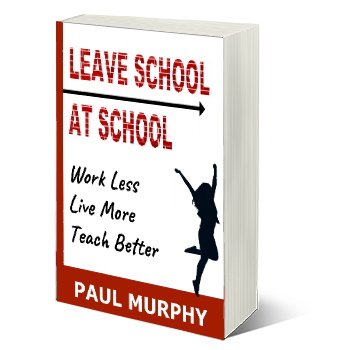
It sounds simple because it is, and yet so many teachers have a hard time doing it. If only there were a book that could help them…

(Disclosure: I wrote it):

Teachers' Extra Hours Are Different


For something that should be relatively easy to calculate, there is a lot of debate about just how many hours teachers work. Read the comments on nearly any online article about teaching and you will be met with vigorous disagreement on the matter. Make the claim that teachers should be paid more and you can be sure that someone will point out our seven-hour days, summer vacations, and breaks for the holidays. Argue that teachers are overpaid, and you will be besieged by outraged educators who will tell you just how many hours they spend on the job each week, how even their breaks are actually just more work, and how, when they’re dead and buried, they’ll still find a way to grade papers.

The data isn’t particularly helpful, either. Like most topics people enjoy arguing about, you can find a study to support damn near any conclusion you want:

The NEA reports that teachers work an average of 50 hours per week.

The NUT teachers’ union, in a survey of 3,000 of its members who were age 35 or younger, found that 74% worked 51 hours or more each week.

A 2012 report from Scholastic and the Gates Foundation put the average at 53 hours per week.

Teachers self-reported working a mean of 43.7 hours on the Census Bureau’s Current Population survey.

And the Bureau of Labor Statistics, employing time-use surveys, found that the average teacher works about 40 hours per week.

But whether teachers are working five hours beyond their contractual time or fifteen, what’s almost always left out of this debate is the fact that teachers’ extra hours are different.

When a police officer works extra hours, she gets paid extra money. Same for nurses and nearly every hourly employee in the country. You’ll never see headlines like these about teachers:

Detroit police overtime pay up 136% over 5 years

Overtime allowed several East St. Louis police officers to earn more than $100K in 2017

5 Lansing bus drivers made more than $100K in 2016

Outcry over firefighters making up to $400,000

There is no overtime pay in education. Teachers who work even one extra hour per week know they will get nothing in return.

Hard-working teachers also have no hope of being promoted. To what job would they be promoted? There’s no going to the principal, explaining how many hours you dedicate to the job and how your efforts have resulted in greater student achievement, and then asking for a raise. Teachers who work extra hours do so with the full knowledge that it will not lead to a better, higher-paying job.

No matter how great a teacher you are, how much you improve test scores, how loved you are by parents and students, how respected you are by your boss and colleagues, and how much your contributions improve the performance of your school, you will not receive a year-end bonus check. There are no bonuses for hitting targets in education. Teachers who work extra hours to be successful with students will get nothing but satisfaction for their efforts.

Unlike small business owners, who are well-known for their long hours, teachers have no hope that their sacrifices today will lead to a brighter tomorrow. There’s no slaving away for ten years as you build your classroom practice with the hope that, eventually, it will all pay off in the end. Teachers start over every year. No one cares how effective you were if you no longer are. Extra hours early in your career don’t lead to riches later in your career.

This is how teachers’ extra hours are different: In literally every other field, the person who puts in extra work expects to benefit financially. Only in education do we expect people to work more hours solely for the benefit of others. And that’s why whenever I read something that questions how many hours teachers actually work I want to scream.

Even teachers who donate a single hour of their time can claim the moral high ground over every other professional because teachers’ extra hours are, by definition, altruistic.

Merriam-Webster: Altruism refers to a quality possessed by people whose focus is on something other than themselves.

Every time you see a teacher leave work thirty minutes after her paid day has ended, or take work home on the weekend, or check papers at her kid’s soccer game, you are seeing a person who is acting selflessly.

No one will pay her for her time.
No one will promote her.
No one will slip her a bonus check at Christmastime.
Most of the time, no one will even thank her.

Instead, they’ll hop on the Internet and explain how selfish and greedy teachers are for those pensions they’ll earn after working countless hours at no taxpayer expense over their 30-year career.

And if the ignorant carping weren’t bad enough, teachers who go the extra mile are often punished by their employers. In every other field, going above and beyond is rewarded. In education, doing more leads to more work. If you work hard to become an expert classroom manager, you can expect to get the toughest students. If you’re competent and conscientious, you get asked to lead school initiatives (usually with little or no extra pay). If you’re dedicated and hard-working, you’ll be expected to attend after-school events (again, without pay).

With the exception of positions like coaching or department chair (which tend to pay peanuts), every hour — no, every minute — of time that teachers work beyond their contracts is given with absolutely zero expectation of it personally benefiting them.*

Teaching is the only line of work where this is true, and that’s why teachers extra hours are different and it’s also why the argument about how many hours teachers actually work misses the point entirely.

————————–

*Except in that warm fuzzy feeling kind of way we always expect should be enough for teachers, since they’re working with kids and the job is so meaningful and all that hoo-hah. Odd that we don’t feel like that’s enough for pediatricians.

At What Point Do We Stop Blaming Teachers


At the beginning of this school year, TNTP released a report called The Opportunity Myth, in which they repeated a golden oldie from the reform agenda’s playlist:  Public schools suck and it’s mostly because public school teachers suck. They didn’t come right out and say that, of course, but it’s hard to interpret the report’s introduction any other way. Judge for yourself:

Far too many students graduate from high school still unprepared for the lives they want to lead. They enroll in college and land in remedial courses, or start jobs and discover they’re missing skills they need. We wanted to understand why.

To do this, we followed nearly 4,000 students in five diverse school systems to learn more about their experiences. What we found was unnerving: classroom after classroom filled with A and B students whose big goals for their lives are slipping further away each day, unbeknownst to them and their families—not because they can’t master challenging material, but because they’re rarely given a real chance to try.

In fact, most students—and especially students of color, those from low-income families, those with mild to moderate disabilities, and English language learners—spent the vast majority of their school days missing out on four crucial resources: grade-appropriate assignments, strong instruction, deep engagement, and teachers with high expectations. Students spent more than 500 hours per school year on assignments that weren’t appropriate for their grade and with instruction that didn’t ask enough of them—the equivalent of six months of wasted class time in each core subject. And middle and high school students reported that their school experiences were engaging less than half the time.

The report is exactly what you’d expect if you’ve been in public education for any length of time, and if you’d like to read why you can safely ignore it, check out Peter Greene’s criticism here and Matt Barnum’s here.

What strikes me is how reformers continue to shamelessly want it both ways.

They have, for the most part, won. They rammed through the standards they wanted. Tenure protections have been decimated in many states. Schools are more “data-driven” than ever. School choice continues to expand. Teachers can now be held accountable for their students’ performance on a standardized test. Reformers have managed to convince 7 out of every 10 Americans that our public schools deserve a C or D rating, even though most believe their children’s own schools are just fine.

School leaders, in their quest to take individual teacher differences out of the equation and standardize lessons just as much as we’ve standardized tests, have adopted Common Core-aligned programs and required strict fidelity to them. They’ve done everything they can to take teacher judgment out of education, going so far as to forbid educators from using anything that hasn’t received prior approval from central office administrators. Some of these programs literally have scripts for teachers to read, and many districts require teachers to follow pacing guides to make sure they cover all the material before the big exam and to ensure continuity across the district. Because I guess that’s important.

The way schools are run today is different than they used to be run, and it isn’t because schools decided they needed to change or parents demanded it; it’s because those changes were forced on them by people with the same ideology as those who write reports criticizing teachers for their weak instruction, below-grade-level assignments, inability to engage students, and low expectations.

It’s the same thing that infuriates me whenever teacher effectiveness is discussed at a district level.

As a teacher who has been told to teach a program as it’s written, how the hell is it my fault if the assignments students get are not challenging enough? I’m not the one who designed the assignments.

If you’re requiring me to read from some stupid script written by publishers who’ve never met my students, then how can you fairly evaluate my instruction? It’s not my instruction.

Should we be surprised that students aren’t engaged during a lesson that’s delivered by a teacher who had no hand in creating it and who sees it as the contrived lump that it is? I’m not a terrible actor, but hand me a lemon and I’m going to have trouble convincing even the most eager-to-learn student that I’m giving them lemonade.

Why would we expect students to be engaged when they’re walked through standard after standard with the goal of preparing them for a test? Last week, my third graders read an article (out of the district-mandated curriculum) on the transcontinental railroad. They were interested and asked lots of questions. I went rogue and showed an unapproved video of how it was built. They had more questions. I could envision us spending the next two weeks learning about westward expansion. We could discuss Manifest Destiny and investigate why certain large western cities are located where they are today. We could read about how the railroad affected the environment and how it upset Native American hunting grounds and led to the taking of their land.

Instead, I had to move on. I had to teach about sequence and cause and effect because I had a test to give on those skills and a new topic (completely unrelated to the American west or even American history) to start on Monday.

I had to do those things because that’s what’s in the standards these reformers so badly wanted and because my district needs data to make decisions and because I can’t be trusted to make decisions about how to best prepare my students for those tests, much less for anything more important than tests.

But TNTP wants to tell me it’s my fault students aren’t engaged?

If I’m doing what I’ve been told to do, then how do you evaluate my effectiveness? Shouldn’t you really evaluate the effectiveness of the curriculum you’ve forced me to use?

This is the educational world the reformers have wrought, and the one they still have the temerity to criticize. They created this mess, and now they’re pointing at it, holding their noses, and telling teachers to do better.

Please.

The reformers’ agenda has had a chance to work. If it isn’t — if kids aren’t being given grade-level tasks, if instruction is weak, if students aren’t engaged, if teachers aren’t expecting enough of them — then it’s long past time for the reform crowd to own their failures and stop scapegoating teachers, many of whom are doing nothing more than exactly what they’ve been told to do with the materials they’ve been told to do it with.

If students aren’t able to pursue their goals, it’s not because teachers have failed them. It’s because reformers have.

If you want to blame teachers, then you need to allow them to make some decisions. You need to give them some power. Blaming teachers for the state of education today, when teachers have lost nearly every skirmish with the well-financed reform movement, is straight from the reformer playbook, where all the plays are designed wonderfully, but the damn players don’t know how to run them.

If you want teachers to be nothing more than compliant replaceable parts, then you don’t get to blame them when your plans don’t work out.

The army doesn’t fire soldiers when the general’s plan is a disaster.

NFL teams don’t swap out their entire rosters when the coach’s gameplans result in multiple losing seasons.

And reformers should no longer get to blame teachers when teachers are working under conditions created by those reformers.

The Teacher's Guide to Changing Careers


At the end of Dan’s last article, “I Quit Teaching and Won’t Go Back,” he wrote:

When I made my departure official and announced it to the world, I was humbled by the response of kind words and expressions of sadness for losing what I had to offer the classroom. But I was also alarmed by the number of responses I received from teachers asking how I managed to do it. I received texts, emails, and phone calls from teachers all over the national network I had been a part of declaring that they wanted out, too…I began receiving messages from friends of friends and even a few strangers. I had somehow become the exodus guru. I still receive these messages with the most recent just last week from a woman I once met at a conference who found me on LinkedIn and wondered if I could give her friend some advice.

This article, the third and final part in this series, is Dan’s advice.

Dan Laird

Since I was employed by the same district where I completed my internship, I never really experienced the whole job search process. I earned my place, but I certainly was lucky to be interning in a school with an opening. I now found myself looking for a job with no experience looking for a job. Obviously, I knew the basics, but I was now swimming in unfamiliar waters, waters that had expanded thanks to the internet.

Step 1: Update the Ol’ Resumé

Since the last entry on my most recent résumé from 1999 was for being a delivery driver for Pizza Hut, I had some work to do. And since that résumé was stored on a 5 ¼” floppy disk, I found it best to simply start over rather than see if the Smithsonian offered computer time. Because I was keeping my options open, I realized that I would be tweaking my résumé and cover letter again and again to match the job for which I was applying. After all, I highly doubt that the folks hiring for the copywriting position I pursued were interested in my proficiency with Google Classroom. To handle the task of juggling multiple résumés, I paid for a monthly subscription to the résumé building site, MyPerfectRésumé. It allowed me to save multiple drafts and focus on the content without the hassle of the formatting. (Helpful hint: I also discovered that if you pay for a month or two then attempt to cancel, the site will offer you a full year for the price of one month.)

Every time I applied for a job, I made a folder on my computer for that application, résumé, and cover letter. In the modern tech age, it is easy to apply for jobs at a rapid-fire pace. Despite that, some companies will respond as if it is the only job you pursued, and, believe it or not, their initial correspondence may offer very little indication as to which job posting they are referring. If you are casting a wide net, it can be very easy to lose track of your applications and nothing is more of a turn off for potential employers than confusing one opening for another. Also, by keeping a file for each application, I could easily find the closest résumé version for adaptation that best fit the next job posting.

Step 2: Finally Learn About LinkedIn

Despite being the butt of jokes for years, LinkedIn proved to have a place in the job search world. It turns out that employers may want to do their homework on you and this gives them a social media source to learn more about your professional accomplishments without having to sort through New Year’s Eve photos, your angry comments about being a cursed Detroit Lions fan, or hilarious cat memes. (Sidenote: You might want to check the privacy settings on your Facebook account). Since I was determined to go all out on this venture, I  paid for the premium subscription during my job hunt which allowed me to see who was reviewing my profile. I was pleasantly surprised to find views from companies to which I was applying.

In addition, many job search sites allow you to attach your LinkedIn profile to applications. Some even convert your LinkedIn profile information into the application itself. Since the résumé needs to be short, sweet, and right to the point, the LinkedIn profile allows you to really draw attention to work you want to emphasize.

Step 3: Find Your Source for Jobs

Job search sites seem like a dime a dozen. It’s important that you do your homework and monitor your success rate so you know what works best for you. Check to see if the site allows you to apply on its page or if it redirects you to other sites. Remember that companies pay to post their jobs on these sites. If the site you picked isn’t taking the application directly, it probably isn’t being used by the company who posted the job, which means your application may be dead in the water and lost to the internet.

Most of my success came from Indeed.com. In fact, that is where I found my current job. Indeed provides a very quick application process. If you have your résumé and cover letter ready to go, you can send it with the click of a button. A nice way to tell if a company has invested its money with Indeed is to see if it has added on to the application process. Companies can use a default application or they can add their own questions to the process. If you see these extra questions, you know that the company has prioritized this hiring source in its budget. If you do see short response questions on an application, always save your responses in a separate document so you don’t lose them once you submit your application. If you apply for another similar position, you may find a similar question.

Step 4: Cast a Wide Net

One of the biggest misconceptions teachers have is that their qualifications lock them into a teaching role for life. It’s certainly what I thought. What else can you do with a history major and English minor? Curate a museum? Write the great American novel? Finding an open position with the former is about as likely as becoming a rock star and the latter isn’t exactly a financially sound decision for a 40-year-old with two children and a mortgage.

I learned to stop searching for jobs for which I thought I was qualified and instead to start searching for my qualifications. First, I searched for ALL jobs in my city and state. For years I had been telling my students that they may very well end up in jobs that haven’t been invented yet. Here was my chance to see what had been invented since I joined the workforce. Of course, there were jobs that sounded great for which I was nowhere near qualified. Still, those are options if you have a long-term plan that involves going back to school. So if you want out and can bear it a few more years, target one of these jobs and start taking classes now. But there were also opportunities for people like me looking to make an immediate evacuation. From there, I started looking for more jobs like the ones I stumbled upon. It was a domino effect of discovery. As it turns out, the world needs teachers in every corner of the workforce and not just for teaching STEAM.

Step 5: Don’t Wait. Keep Applying.

Just because a position is posted, it doesn’t mean that anyone is in any hurry to fill that position. Nothing proves this point more than positions for the state. When you check your state government website for job postings, you will most likely find more postings than you have time to look through. After applying for a few state positions, I started to get the feeling that even the state didn’t want to look through all of them. Rarely did I ever hear back from one of these applications. A few times I was told a position was filled. Once I was told that the state changed its mind and eliminated the position. Most of the time, I heard nothing. The downside to fast and furious job application technology is that most companies now have to sort through applications from people who only applied because they had nothing to lose.

Step 6: Know What You’re Getting Yourself Into

It’s a very exciting feeling to get called for an interview. While the interview is a great chance for the employer to get to know you, remember that it is also a good opportunity to learn more about the job for which you applied, sometimes without even asking a single question.

Not all job postings are specific. They may give you enough information to pique your interest, and hold back information that may cause you to look elsewhere. In addition, some job sites allow you to leave your résumé posted on a general “bulletin board” for any employer to see. This may lead to calls for interviews you didn’t expect, especially from insurance companies. Because I was keeping my options open, I attended some of these. A few of these interviews were located in bare offices that looked like they had been rented for the day. One interviewer mistakenly thought, ¨How would you like to live in Indiana?” was an enticing sales pitch. And one scheduled interview turned out to be a group interview with a dozen other candidates. This wasn’t necessarily a bad thing, but when asked what we were all looking for from this position, one applicant responded, “I want time to do my karate.” No offense to the karate kid, but I felt like I had a bit more to offer and was surprised we were up for the same position. It was clear that I was not invited there for my extensive résumé. Lower level employees were clearly mass-hired, disposable commodities.

Don’t be embarrassed about getting tricked by these “opportunities.” This process took me almost a year to get the hang of. As long as you’re not sacrificing something more important, you have nothing to lose by going to these interviews. Use the opportunity to brush up on your interview skills, learn to anticipate some typical questions, and, at the very least, give yourself an interesting story to tell. You never know when something might surprise you. In fact, before I took my current job, I was in the process of accepting a position with a financial company that happened to specialize in teacher 403b retirement funds. It was an unanticipated natural fit and the company was excited to have an actual former teacher on the team. I would probably be working there if my current job hadn’t made an offer right before I was to take my exams.

So, to recap:

  • You have value outside of the classroom.
  • Your qualifications do not lock you into a teaching job for life.
  • Learn about expectations for résumés outside of education. They’re different. Then update your résumé. I recommend subscribing to a résumé building website.
  • Set up or update your Linkedin account. Learn about best practices that will help attract interest from employers.
  • Investigate different job search sites and determine which works best for you.
  • Search for all jobs in your geographical area. You’ll learn about jobs you didn’t know existed. The discovery process will help you figure out which jobs fit your qualifications.
  • Don’t wait to hear back because many times you won’t. Just keep applying.
  • Keep your options open. Attend interviews. You’ll become more comfortable with them, become better prepared to answer common questions, and learn what companies are looking for.
  • Be patient but persistent. Keep looking, applying, and interviewing.
  • Forgive yourself. I made lots of mistakes, but this was a new experience. Recognize that it’s going to take you a while to get the hang of it.

Good luck!


Thanks for reading the series! Dan and I both appreciate your interest and we hope this has helped those of you thinking of making a change. For those who plan on persisting in the classroom for the next five or ten or fifteen years, I have a book called Leave School At School that will help you cut back on hours without sacrificing your impact with kids. In fact, because you’ll be more focused, better-rested, and less stressed, you’ll probably be a better teacher.