It's awesome. Enjoy:
Here's more:
http://billowingwords.com
Tuesday, June 21, 2011

Monday, June 13, 2011
Writing for the "Right" Age
A few days ago Corey wrote about an exercise she was asked to do at the 2009 Rutgers conference. The panel leader asked the attendees to write their names and what age they felt inside. The point was that whatever age you feel inside should be the age you write for. It's cute and a little clever and maybe even somewhat useful, but I think mostly it's nonsense.
As writers, we traffic in the truth and this exercise strikes me as being largely untruthful.
Because the truth is, none of us feel the same age inside all the time. Or even most of the time. In two weeks, when I get together with some of my college buddies, I will feel (and probably behave) like a twenty-one year old, complete with lewd remarks I'd never make in the presence of my wife and more adult beverage consumption than I'll engage in the rest of the year.
Yesterday, when I tried to run three miles and gave up because my legs got sore around the 1.5 mile mark, I felt more like a forty-five-year old.
When I got on a bike last week for the first time since probably middle school I felt a lot like I felt when I was first learning to ride--nervous, cautious, embarrassed, and awkward. (And my butt hurt as if it had the padding of a person much younger as well)
When I learned my mom got cancer and then when she had open heart surgery I wrestled with the fears of a six-year-old.
On snow days I feel eleven.
And when I walk into a high school gym, memories of my own basketball playing days wash over me and I feel, if only for a fleeting moment, like I am seventeen again.
I think the better advice is this: for whatever age you are writing, you ought to be able to take yourself back in time and remember what it was like to be six, or eleven, or seventeen, or forty-five. And if you need to play a certain song, or recall a certain memory, or visit a certain place in order to do that, then go right ahead. It shouldn't be too hard. In fact, it's probably the most natural thing in the world.
As writers, we traffic in the truth and this exercise strikes me as being largely untruthful.
Because the truth is, none of us feel the same age inside all the time. Or even most of the time. In two weeks, when I get together with some of my college buddies, I will feel (and probably behave) like a twenty-one year old, complete with lewd remarks I'd never make in the presence of my wife and more adult beverage consumption than I'll engage in the rest of the year.
Yesterday, when I tried to run three miles and gave up because my legs got sore around the 1.5 mile mark, I felt more like a forty-five-year old.
When I got on a bike last week for the first time since probably middle school I felt a lot like I felt when I was first learning to ride--nervous, cautious, embarrassed, and awkward. (And my butt hurt as if it had the padding of a person much younger as well)
When I learned my mom got cancer and then when she had open heart surgery I wrestled with the fears of a six-year-old.
On snow days I feel eleven.
And when I walk into a high school gym, memories of my own basketball playing days wash over me and I feel, if only for a fleeting moment, like I am seventeen again.
I think the better advice is this: for whatever age you are writing, you ought to be able to take yourself back in time and remember what it was like to be six, or eleven, or seventeen, or forty-five. And if you need to play a certain song, or recall a certain memory, or visit a certain place in order to do that, then go right ahead. It shouldn't be too hard. In fact, it's probably the most natural thing in the world.
Monday, June 6, 2011
The Baker's Assistant, A Short Story for Kids
The line outside the bakery was twenty people long and the bakery hadn't even opened. Inside, Chef Sprocket, the baker, opened a cupboard to take down his ingredients. He snatched the bag of sugar. He pulled down the cinnamon. He grabbed the chocolate chips. But when Chef Sprocket went to hoist the huge sack of flour from the shelf, there was no sack of flour to hoist.
"VHAIR IS ME FLOUR?" he hollered.
Sven, the chef's assistant, ran into the kitchen. "What is the problem, Master Sprocket?"
"ME FLOUR! IZ GONE!"
Sven glanced out the window at the growing throng. How would they ever serve all those people if they didn't have flour? "I will go get some," he told the baker, and he rushed out the back door. He jumped on his bike and rode to the supermarket. But when he got inside he was dismayed to see that they too were out of flour. "How can this be?" Sven asked, but there was no time to waste complaining to the manager. He got back on his bike.
Sven could think of only one other place where he could get flour--McCready's Bakery, Chef Sprocket's only competition in the pastry field. Sven swallowed. McCready was a hard man who made his desire to crush Chef Sprocket no secret. Still, what choice did Sven have?
McCready's was already open and busy by the time he got there. The smell of donuts, biscuits, and cakes filled his nose. In his haste, Sven had forgotten to eat breakfast. He was very hungry. And if he bought some pastries, perhaps McCready would be more willing to help.
"I'll have a raspberry-filled donut and a buttermilk biscuit," he told the clerk. He ate the donut while he waited for Chef McCready. The biscuit he put in his pocket for later.
"What do you want?" McCready snapped when he saw Sven. The pastry chef was a tall, thin man with an oily mustache. He wore a pillowy white hat on his head.
Sven said, "Um...uh...see..." And then, in an unbroken string of words, "We've-run-out-of-flour-at-Sprocket's-and-the-supermarket-has-run-out-and-so-I'd-like-to-buy-some-off-you."
McCready smiled. "Why should I sell you my flour? I need it for my own pastries."
"But surely you have some to spare."
McCready's smile grew brighter. "Surely," he said. Then, "The answer is no. Now get out of my bakery."
Sven thought he might cry. He imagined what Chef Sprocket would say when he returned with no flour. He'd probably get fired.
Because tears had puddled in his eyes, he almost missed the sign by the driveway. "The Gilberts" was written in script on a wooden arrow that pointed toward a small house. The name sounded familiar...
The Gilberts! Of course! As in Helen Gilbert. Sven had seen her picture in the newspaper just last week. She'd won the annual pie baking contest at the county fair. He remembered because Chef Sprocket had seen him reading the article and shouted, "PUT ZAT DOWN! ZROW IT AVAY! IZ MY RECIPE. ZAT VOMAN STOLE IT!"
Any lady who had won the fair's pie baking contest would have to have flour in her kitchen. Sven leaned his bike against a telephone poll and approached the house. He pressed the doorbell. No one came. He rang again, but still, no one answered.
He was about to leave when he had an idea--a bad idea. He could break in. It wouldn't really be stealing. He'd take the flour and then come back in a few days and explain the whole thing. He'd give her twice what he took.
Sven tried the doorknob. Locked. But at the bottom of the door there was a square, leather flap. A doggie door. Sven was a tiny man. He got on his knees and stuck his head through. The coast was clear. He crawled inside. The house was quiet. Maybe Mrs. Gilbert had taken her dog to the vet. If that was the case, he'd better hurry.
Sven threw open the cupboard doors and immediately spotted a bag of flour. But as he reached for it, his hand froze in mid-air at the sound behind him.
GRRRRRRRRRR
Sven turned slowly. A vicious looking Rottweiler was glaring at him.
"Good doggie," Sven said. "Good doggie."
GRRRRRRRRRR. Drool dripped from the dog's muzzle.
Sven looked for a place to run or hide or something to hit the dog over the head with. He found nothing. The dog attacked. Sven through up his arm to protect himself, but the dog bit him in the pocket.
He had forgotten about the biscuit. Quickly, Sven pulled the biscuit out and threw it down a hallway. The dog scampered off. When it did, Sven bolted for the door.
It was hopeless. He'd been gone at least an hour. Dejected, he rode back to Sprocket's. Sven was so upset when he got there that he didn't notice the line had disappeared. He walked into a bakery that was buzzing with happy people eating pastries.
"VHAIR YOU ARE! bellowed Chef Sprocket.
"What has happened?" asked a very confused Sven.
"I forget. I order more flour yesterday. The truck vhas late." The Chef shook his head. So did Sven. "Here,"Chef Sprocket said, "Have a biscuit."
Thursday, June 2, 2011
Jerry and His Smelly Donkey, a Short Story for Kids
 Jerry owned a donkey, and every couple of weeks, after he'd grown bored of a place, he would strap his bundle of stuff to the back of his donkey and head out for the open road.
"Move faster, donkey!" Jerry would yell.
"You're so lazy!" Jerry would shout.
"And you smell like rotten pickles!"
Jerry was tired of his donkey. He thought he might finally be ready to settle down, get a job, and buy a house. And if you own a house, you don't really need a donkey.
Forest Springs seemed like a nice place to live. The trees had leaves. People obeyed traffic laws. Children rode bikes. One child zipped past Jerry and his donkey. "Peeuuwww! That is one stinky mule!" he said. So maybe the schools weren't the greatest.
There was a man selling peanuts at the side of the road. "Would you like to buy my donkey?" Jerry asked him when the man had finished shouting about how his peanuts were "fresh-roasted."
The peanut vendor looked at the donkey. He wrinkled his nose. "I don't want your donkey, man. That thing smells like sweaty socks."
Jerry tried to sell his donkey to six other people, but none of them wanted it either. He came up with a new plan. Instead of selling the donkey, he would just give it away. Who wouldn't want a free donkey? He chuckled at his own cleverness. "Pretty soon," Jerry said, "I'll be rid of you, my slow, malodorous friend."
It wasn't long before he came upon a beggar huddled under a blanket in a dirty alley. "Can you spare some change, brother?" the beggar said.
"No, I cannot," Jerry answered. "I don't have two pennies to rub together, but I can give you this donkey."
The beggar scowled. "That old thing? It smells like my armpits. It's bad enough I got to live with my stinky armpits, I don't need no smelly donkey to add to it."
Jerry tried to give his donkey away to a little girl, a lonely widow, and the zoo, but none of them wanted the animal. "You see how worthless you are, donkey? Not even a lonely old woman wants you. I ought to leave you right here at the side of the road."
That was it! He didn't need to sell the donkey or give it away, he could just abandon it! Jerry climbed off the smelly donkey and grabbed his bundle of belongings. "See you later, donkey," he said, and then added, "Actually, that's not true. I plan on never seeing, or smelling, you again." As Jerry strolled off toward the center of town, the donkey stood there stupidly, not knowing what to do.
Jerry soon found what he was looking for, a person who needed a roommate. He moved in to a tiny apartment on Main Street. But Jerry was so used to the open air that he felt cramped in the small space. The apartment was tiny and his roommate was a slob.
"Pick up your stuff, you slob!" Jerry scolded the man. "What do you need so much stuff for anyway?" They had a fight and Jerry's new roommate threw him out.
"And take your stupid bundle with you!" he said.
Jerry tried other places, but no one wanted him. Some people said he smelled a little like a donkey. He decided to go back to his old life. He slung his bundle of stuff over his shoulder and started walking. It was a long way to the next town.
The night was growing dark and his legs were sore, so he stopped to sit at the side of the dusty road. And as he did he smelled something on the wind. It smelled a little like rotten pickles. The scent reminded him of sweaty socks. It was redolent of the armpits of a homeless beggar. It smelled like Jerry's donkey, and it smelled wonderful.
Saturday, May 28, 2011
On Tenure, LIFO, and Paying for Years of Service
WARNING: Serious teacher post ahead.
There's been a lot of talk lately about reforming (or even getting rid of) tenure in the public school system. Critics say it makes it virtually impossible for districts to fire bad teachers. Another argument is that it grants teachers more job protection than anyone else in our economy. Less talked about are the related issues of LIFO* (last in, first out) and basing teachers' salaries on their years of service. In Michigan, and in many other places across the nation, all of these under attack.
I'm not going to trot out all the usual defenses of these practices. What I will do is offer a glimpse of what would happen if they disappeared.
What critics will say is that teachers should be treated like any other employee. They should be rewarded for good performance and penalized when they're ineffective. No one wants a great teacher laid off just because she's young. Teacher pay should be based on effectiveness, not seniority. These sound like reasonable arguments. But in actual practice, tenure, LIFO, and paying teachers based on years of service provide certainty to districts and consistency to communities.
Changing the current system will lead to unintended consequences. The legislature would essentially be turning every teacher in the state into free agents. Without the job protection tenure affords (granted after four years in Michigan), teachers just starting out their careers (unmarried, mobile, embracing change) could hop from district to district looking for the right fit. Without the incentive of future tenure and the yearly pay raises, there would be no reason to stay, especially for the best teachers.
If you tie teacher pay to effectiveness rather than seniority, there is nothing to keep a great teacher from leaving and looking for a better deal. Most veteran teachers I know don't even consider leaving after seven or eight years because of the hit their salaries would take when they changed districts. And which teachers would be most likely to take advantage of this new freedom? The very best ones. If you're a great teacher, why would you stay in your school if another school is willing to pay you more? And just where do you think our very best teachers would eventually end up? In the poorest districts, where they're needed most but the work would be harder and the pay less? Or in the districts who could pay them the most but probably need them the least?
Tenure, LIFO, and paying teachers based on seniority might be unpalatable, but no one can argue that it doesn't provide districts with a high degree of certainty from year to year. Right now, as districts figure out their budgets, one thing they do not have to worry about is losing half of their veteran teachers to better paying districts. And communities can count on which teachers are going to be there for their kids in the fall.
Personal Aside: I should say that as a male teacher in elementary education, these proposed changes don't terrify me. Quite the opposite. Believe me, I'd like a little more leverage. In the system described above, good teachers would be in very high demand (especially if the state actually started awarding schools for high performance) and the school system would more closely reflect the marketplace in that those teachers in the highest demand would command the highest salaries. There are very few men teaching in today's elementary schools (9 percent of teachers, actually). Given the high number of children being raised without a father at home, I think that might work to my advantage.
Another Criticism of the Criticism: Right now, schools have a much higher incentive to cut costs than they do to provide a great education. If that remains the case, it's hard to see how getting rid of tenure is going to ensure the best teachers remain in the classroom. My suspicion is that without the impediment of tenure, school districts will simply lay off the teachers who cost them the most, regardless of their effectiveness.
*"Last in, first out" is the practice school districts use for laying off teachers. Simply stated, those teachers who were hired most recently get laid off first when cuts to staff are made. Veteran teachers have virtually no fear of losing their job due to staffing cuts.
There's been a lot of talk lately about reforming (or even getting rid of) tenure in the public school system. Critics say it makes it virtually impossible for districts to fire bad teachers. Another argument is that it grants teachers more job protection than anyone else in our economy. Less talked about are the related issues of LIFO* (last in, first out) and basing teachers' salaries on their years of service. In Michigan, and in many other places across the nation, all of these under attack.
I'm not going to trot out all the usual defenses of these practices. What I will do is offer a glimpse of what would happen if they disappeared.
What critics will say is that teachers should be treated like any other employee. They should be rewarded for good performance and penalized when they're ineffective. No one wants a great teacher laid off just because she's young. Teacher pay should be based on effectiveness, not seniority. These sound like reasonable arguments. But in actual practice, tenure, LIFO, and paying teachers based on years of service provide certainty to districts and consistency to communities.
Changing the current system will lead to unintended consequences. The legislature would essentially be turning every teacher in the state into free agents. Without the job protection tenure affords (granted after four years in Michigan), teachers just starting out their careers (unmarried, mobile, embracing change) could hop from district to district looking for the right fit. Without the incentive of future tenure and the yearly pay raises, there would be no reason to stay, especially for the best teachers.
If you tie teacher pay to effectiveness rather than seniority, there is nothing to keep a great teacher from leaving and looking for a better deal. Most veteran teachers I know don't even consider leaving after seven or eight years because of the hit their salaries would take when they changed districts. And which teachers would be most likely to take advantage of this new freedom? The very best ones. If you're a great teacher, why would you stay in your school if another school is willing to pay you more? And just where do you think our very best teachers would eventually end up? In the poorest districts, where they're needed most but the work would be harder and the pay less? Or in the districts who could pay them the most but probably need them the least?
Tenure, LIFO, and paying teachers based on seniority might be unpalatable, but no one can argue that it doesn't provide districts with a high degree of certainty from year to year. Right now, as districts figure out their budgets, one thing they do not have to worry about is losing half of their veteran teachers to better paying districts. And communities can count on which teachers are going to be there for their kids in the fall.
Personal Aside: I should say that as a male teacher in elementary education, these proposed changes don't terrify me. Quite the opposite. Believe me, I'd like a little more leverage. In the system described above, good teachers would be in very high demand (especially if the state actually started awarding schools for high performance) and the school system would more closely reflect the marketplace in that those teachers in the highest demand would command the highest salaries. There are very few men teaching in today's elementary schools (9 percent of teachers, actually). Given the high number of children being raised without a father at home, I think that might work to my advantage.
Another Criticism of the Criticism: Right now, schools have a much higher incentive to cut costs than they do to provide a great education. If that remains the case, it's hard to see how getting rid of tenure is going to ensure the best teachers remain in the classroom. My suspicion is that without the impediment of tenure, school districts will simply lay off the teachers who cost them the most, regardless of their effectiveness.
*"Last in, first out" is the practice school districts use for laying off teachers. Simply stated, those teachers who were hired most recently get laid off first when cuts to staff are made. Veteran teachers have virtually no fear of losing their job due to staffing cuts.
Tuesday, May 24, 2011
A Fable, Retold

One day the animals were bored and so they decided to stage a contest. Zebra said, "I say we have a contest to see who has the most stripes!" Cow said, "I think we should battle to see who can produce the most milk!" Flamingo said, "I think we should hold a contest to see who looks best standing on one leg." And Raccoon said, "I think we should all dress up, and whichever one of us looks most like the Hamburglar should win!"
The other animals all hissed or mooed or growled or quacked or cawed or roared or whinnied or...you get the picture.
But then Cheetah strolled into the clearing and purred, "I say we race to see who is fastest."
Now Cheetah was widely regarded as the most arrogant of the animals (except for Lion, but he was always asleep) and all the other animals talked behind his back and spoke openly about their desire to knock him from his self-appointed pedestal. However, most of the animals were clever enough to realize that they stood no chance in a race against Cheetah.
"I'll do it!" proclaimed Human, who never lacked for unwarranted confidence.
"I'll do it!" blurted Hare, who wanted to make amends for that lackluster performance against the Tortoise.
"Fine. I'll do it," snapped Tortoise, after Crocodile and Chameleon goaded him into defending his title.
And so the field was set. On the appointed day, Human, Hare, Tortoise, and Cheetah all lined up at the starting line. Human thought, "I'll use my superior intellect to win." Hare thought, "I won't make the mistake of taking a nap in the middle of this race." Tortoise hoped the others would somehow disqualify themselves. And Cheetah told himself over and over, "I'm the fastest animal in the kingdom. Nobody is as fast as me. I'm awesome. I'm unbelievable. I'm so fast, I make light jealous!"
And they were off. Cheetah raced ahead of the pack, quickly disappearing over a rise. Human had hidden a pistol in his running shorts, but by the time he pulled it out and took aim, the Cheetah was out of range. He shot Hare instead. And Tortoise plodded along, inch after inch, as Human swore and Cheetah sped farther and farther away.
By the time Tortoise finally crawled over the finish line, Cheetah had already bought twelve rounds of drinks for the other animals to celebrate his victory. The animals seemed to have forgiven Cheetah his arrogance. Everybody loves a winner, especially when they buy the booze. Human was especially happy. He tried to hug Tortoise, but fell over instead.
"Congratulations," Tortoise said to Cheetah. "You are the fastest."
"I always knew I was," Cheetah said. "Slow and steady may have worked once, but it's a poor substitute for talent and confidence."
THE END
Thursday, May 19, 2011
What I Learned About Sneezing
 In general, I don't care for research. This is why I will probably never write historical fiction. However, there are times when, in the course of writing a scene, I doubt myself and feel the need to go googling. I was researching the act of sneezing the other day with the aim of determining how badly you can injure yourself in the act. I had heard that your heart stops when you sneeze and for years this sounded completely reasonable to me. After all, if a sneeze can force you to shut your eyes when you're blazing down the expressway at
 Turns out it can't. I know, I was a little bummed too.
So then I googled, "Can sneezing kill you?" because, let's face it, we're kind of fragile things, we humans.
Alas, sneezing rarely leads to death (although if you're sick and you sneeze on a really old person, there's a chance).
But don't be disheartened. Sneezing can jack you up in lots of other wonderful ways. Scientists estimate the speed of a sneeze (band name alert) at 650 mph. Not surprisingly, it's kind of stupid to try and hold this sort of force back. You can bust an eardrum, tear blood vessels, damage your sinuses, or even cause a brain hemorrhage. (Never realized stifling a sneeze and watching Joy Behar had so much in common.)
And even if you don't hold them back, sneezes can be strong enough to cause a whiplash effect, leading to pulled muscles, bitten tongues, and even broken teeth.
In short, sneezes are bad ass.
And occasionally, so is research.
Here's a video of a baby panda sneezing and scaring all hell out of its mother:
And in a "you-can't-make-this-sort-of-thing-up" blessing, here's a news article about a girl who can't stop sneezing, a condition called Paediatric Autoimmune Neuropsychiatric Disorder Associated with Streptococcus, AKA...yep...PANDAS.
Awesome.
Source
Thursday, May 12, 2011
Notes From Third Graders
Was given the following two notes today:
_____________________________________________
_____________________________________________
Never a dull day.
*Names have been changed to keep me from losing my job.
to: murphy
from: jimbo*
you are the best teacher of 3rd grade that I ever had in my life. you are so nice because you learn me great.
love: jimbo
_____________________________________________
Dear, Mr. Muphy
please don't make Cleopatra* get in trouble. She will get grounded for 5 years. Mr. Murphy please. Cleopatra is my best friend. I don't want her to get in trouble. Then she will tell everyone that you are a bad and mean teacher. Please. Then nobody will want to go to your class or they will sign their children out of this school and they will take their money back. Cleopatra means so much to me. What if you had a friend that you like and she/he meant so much to you?
From: Chrysanthemum*
_____________________________________________
Never a dull day.
*Names have been changed to keep me from losing my job.
Thursday, May 5, 2011
Possibly the Best Title Ever

Credit to Anita for asking the question.
My response to that question was too long for the comments, and I haven't blogged anything except that self-congratulatory thing about my mad Twitter skillz in something resembling forever, so here you go.
The best title for a kids book has got to be:
How Lamar's Bad Prank Won a Bubba-Sized Trophy
Here's why:
1. You know what the book is about, which is a good thing.
2. The name Lamar leads one to believe that the main character is black, and, let's face it, this is still fairly unique in the kidlit arena. Unique is interesting.
3. Pranks are always fun to read about.
4. Questions: What exactly is a "bad prank" and how in the world does performing such a thing garner a trophy?
5. The use of the term "bubba-sized" is a good indication of the kind of voice we're going to be exposed to in the novel and it's a voice I'd like to hang out with for a while.
6. We know the ending (or at least, we can assume the ending has to do with winning the trophy) and now the reason to read is to find out how this seemingly inexplicable thing happens. This is one of my favorite story structures. TV shows use it all the time: The victim is seen lying on top of a high-rise in a pool of blood and then the story starts some time earlier and we watch to find out how such a thing happened. Love it.
7. There also seems to be a story of redemption buried in the title. A kid who performs "bad pranks" does not typically win anything, unless withering glares can be counted as winning. My guess: Lamar is a lovable troublemaker who finally comes out on top. And who doesn't love it when that happens?
Anyway, I haven't read it yet, but I will, just because of the title.
Thursday, April 28, 2011
Sunday, April 24, 2011
You Want Me To Teach What Now?
Here are just a few things I pulled from Michigan's third grade standards:
Social Studies:
E2.0.1 - Using a Michigan example, describe how specialization leads to increased interdependence.
P3.1.3 - Give examples of how conflicts over core democratic values lead people to differ on resolutions to a public policy issue in Michigan.
Science:
S.RS.E.1 Reflecting on knowledge is the application of scientific knowledge to new and different situations. Reflecting on knowledge requires careful analysis of evidence that guides decision-making and the application of science throughout history and within society.
S.IP.E.1 Inquiry involves generating questions, conducting investigations, and developing solutions to problems through reasoning and observation.
Reading:
R.CM.03.03 compare and contrast relationships among characters, events, and key ideas within and across texts to create a deeper understanding; including a narrative to an informational text, a literature selection to a subject area text, and an historical event to a current event.
R.NT.03.04 explain how authors use literary devices including prediction, personification, and point of view to develop a story level theme, depict the setting, and reveal how thoughts and actions convey important character traits.
Food for thought: I'd say around half of my students still believe in the Easter Bunny.
Brain development--those who write state standards might want to take a course.
Social Studies:
E2.0.1 - Using a Michigan example, describe how specialization leads to increased interdependence.
P3.1.3 - Give examples of how conflicts over core democratic values lead people to differ on resolutions to a public policy issue in Michigan.
Science:
S.RS.E.1 Reflecting on knowledge is the application of scientific knowledge to new and different situations. Reflecting on knowledge requires careful analysis of evidence that guides decision-making and the application of science throughout history and within society.
S.IP.E.1 Inquiry involves generating questions, conducting investigations, and developing solutions to problems through reasoning and observation.
Reading:
R.CM.03.03 compare and contrast relationships among characters, events, and key ideas within and across texts to create a deeper understanding; including a narrative to an informational text, a literature selection to a subject area text, and an historical event to a current event.
R.NT.03.04 explain how authors use literary devices including prediction, personification, and point of view to develop a story level theme, depict the setting, and reveal how thoughts and actions convey important character traits.
Food for thought: I'd say around half of my students still believe in the Easter Bunny.
Brain development--those who write state standards might want to take a course.
Wednesday, April 20, 2011
I Need New Blogs to Read
A lot of the blogs I used to read haven't been updated in a long time, (You know, kind of like this one) so I could use some fresh voices. If there's a blog you love, could you send me a link and maybe a quick word about why you visit? Thanks.
Tuesday, April 19, 2011
Easter Stuff
Easter Eggs With Legs
By
Paul Michael Murphy
In a pot, I boiled them,
this year’s Easter eggs.
And after I had colored them,
I went and gave them legs.
I put them in a bowl last night,
so Mom could hide them today.
She says she never saw them.
I guess they just walked away.
And here's a repeat from two Easters ago:
Happy Easter!
By
Paul Michael Murphy
In a pot, I boiled them,
this year’s Easter eggs.
And after I had colored them,
I went and gave them legs.
I put them in a bowl last night,
so Mom could hide them today.
She says she never saw them.
I guess they just walked away.
And here's a repeat from two Easters ago:
Happy Easter!
Sunday, April 17, 2011
I'm on Twitter
(Hangs head in shame)
Anyway, follow me or whatever. I'm P_M_Murphy because all the good names, like Ashton Kutcher, were taken. This link might take you there (I still don't really get Twitter.)
Why did I do it? Mostly because I have a smartphone now that I like to play with and this will give me something else to do with it. And also because summer nears and summer equals lots of free time for teachers, despite what Wisconsin teachers' union officials say.
Update: Try this link instead.
Anyway, follow me or whatever. I'm P_M_Murphy because all the good names, like Ashton Kutcher, were taken. This link might take you there (I still don't really get Twitter.)
Why did I do it? Mostly because I have a smartphone now that I like to play with and this will give me something else to do with it. And also because summer nears and summer equals lots of free time for teachers, despite what Wisconsin teachers' union officials say.
Update: Try this link instead.
Sunday, February 6, 2011
Chris Rylander, Author of The Fourth Stall
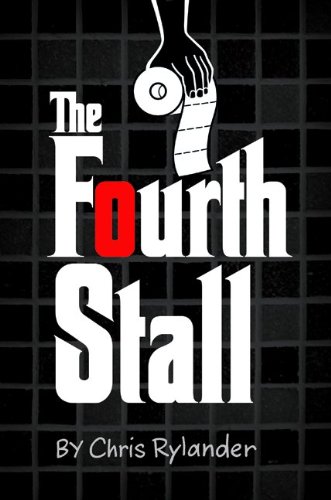 Chris Rylander has been called many things: the voice of the next generation, the Mario Puzo of children's literature, and, every once in a while, Chris or Christopher. In between unicorn hunts, he managed to write a book for kids. The Fourth Stall, summarized here, tells the story of...ah, just read the link...and comes out February 8.
I sat down with Chris on the veranda of his seaside manor in a beautiful fiefdom he's dubbed "North Dakota." After pointing and laughing at a few of his serfs, we got down to the interview.
Murphblog: I’ve seen the book described as “The Godfather for kids,” which begs the question, “Why didn’t I think of that?” What made you think of it and did you run into any problems that might explain why less courageous writers (like Nicholas Sparks) have been reluctant to bring the world of organized crime into children’s fiction?
Rylander: I don’t really have a concrete explanation as to where the idea came from. I guess I was just sitting there eating some frosting probably or something, and then I thought to myself how fun it might be to take organized crime and put a kid-friendly spin on it. There were some challenges, sure, like trying to walk the line between the right amount of violence and having the kids use severed horse heads as pillows and everything. But in the end, I always just asked myself this question: “Is there enough blood and gratuitous violence in this scene?” And if the answer was “no,” then I simply added more. And I think it turned out pretty well. One dead body per page is usually a pretty good rule for children’s books. No, but seriously it was a challenge to get that part just right - because I didn't want to soften it to the point where it was cheesy. But I also didn't want to glorify grade-school gang wars.
Murphblog: Your main characters, Vince and Mac, love the Chicago Cubs and save money to attend a World Series game. The back of the book states that you’re also a huge Cubs fan. Psychoanalyze the Cub fan. What kind of person puts himself through such misery and disappointment year after year?
Rylander: The sort of person who is the opposite of that one guy who always loves to point out how right he is all the time while simultaneously pretending he is only feigning pride but deep down we all know what a smug jerk he is despite the fact that basically everybody likes him anyway and you just can’t figure out why. Did that make sense? I hope not.
Me: Sticking with the Cubs, which of the following emotions best describes how you feel when you read the name Steve Bartman:

a. Hatred because he screwed the Cubs
b. Pity because of how abominably he was treated
c. Jealousy because he had such great seats
d. Other—please explain.
Rylander: – b. Pity because of how abominably he was treated. Bartman, if you’re out there reading this, contact me, I’ll send you a free copy of my book. Heck, I’ll even send you two if you can somehow get the Cubs back to the NLCS.
Me: In the book, Vince is fond of repeating the befuddling wisdom of his grandmother. One example is, “The only real way to eat a pinecone is with tortoise gravy and a sense of self-worth.” What’s the worst advice you could give to someone who’s trying to write a novel?
Rylander: I’d say to write out your novel by hand using a mixture of water and your own blood for ink. That way, when you send the manuscript to editors and agents to consider, you can also include a note that says, “There’s literally a little bit of me in every single page. Enjoy.” They’ll be delighted, and you’ll have a book deal in no time. That, and I also always like to remind people about the importance of wearing a bow tie when you write.

Me: Back to the Cubs. In the book, Vince and Mac try to stump each other with Cubs trivia. I have some Cubs trivia for you. No cheating.
Rylander: This is not fair.
a. Nevertheless. In what year did the Cubs play their first night game at Wrigley Field?
Rylander: I’m pretty sure it was in the late 1980’s… I’ll say 1987. The thing is, I black out most of the Cubs games I watch because they’re just too painful to remember. So I never remember the trivia and Cubs facts they talk about on air. Mac and Vince, however, are too young to have developed that protective crust of cynicism, so they soak it all up like sponges.
[Editor's Note: The first night game was on Aug. 9, 1988.]
b. Why did Keith Moreland wear eye black when it was cloudy?

Rylander: Keith who?
[Editor's note: This is an acceptable answer.]
c. The Cubs have gone over 45 years without being no-hit. Which Hall of Famer was the last to throw a no-hitter against them?
Rylander: I want to say it was probably Koufax or Gibson, but I think this is likely a trick question. You can’t fool me that easily. It was definitely Ebby Calvin "Nuke" LaLoosh. Either him or former president Teddy Roosevelt… Teddy could do just about anything. In 08/08/88, he once stopped a tornado with nothing but a yo-yo and a smile.
[Editor's Note: Koufax. Well done, Chris!]
Me: The villain of your book is a teenage gangster named Staples. What other office supplies would make good gangster names?
Rylander: I don’t know, I went through them all, and I think Staples is the best. I toyed with both Eraserhead and Tapehead, but those were both already taken. Pen15 seemed too juvenile. And Notebook Pants just didn’t have the same ring to it. But Pencil-Cup McCoy was a close second, I can’t lie.
Me: The story contains a plot twist concerning Mac and Vince. When you write, do you plan everything out first or just go where the story takes you and make the necessary changes later?
Rylander: A little of both. I don’t plan out very much at first, but then as I get further along I plan more and more. Although, I really have to give my agent and editor a lot of credit. They both really helped me to shape the final plot and make it all work. And while I’m at, I should probably thank that glass of orange juice I drank that one time for giving me the energy I needed to finish the book.
Me: The end of the book implies a sequel. Are you working on that now? What other projects do you have going?
Rylander: Yes, actually, I just finished the final draft of sequel. That should come out about a year from now. As for other projects, it’s more like what don’t I have going… So that’s how I’ll answer. Here are the only genres that I currently don’t have a project started in:
Me: Well, Chris, between hunting unicorns, avoiding sharks, upstaging Nicholas Sparks, lording over the fiefdom of "North Dakota," and writing in every genre, it sounds like you're keeping busy. Thanks for making some time for us.
Rylander: Thanks so much for all of the great questions, Murphblog! It was a lot of fun.
Friday, February 4, 2011
Fable: Robin and Bluebird

Robin and Bluebird
Robin and Bluebird spent the night sleeping in Farmer Johnson’s oak tree. The next morning, while it was still dark, Robin awoke, bright and chipper and full of as much vivacity as he always was.
“Tweet! Tweet!” he said to himself. “I’m up and at ‘em and ready to seize the day! And I sure am hungry!”
As quietly as he could, so as not to wake Bluebird, Robin lifted off his perch and flitted to the ground. He pecked at the soft earth and soon found a fat, juicy worm.
“You know what they say,” Robin said, “Breakfast is the most important meal of the day!” and he quickly gobbled up the worm.
He flew back into the tree with a full belly and an even more cheerful attitude.
“Tweet! Tweet!” he tweeted. “Wake up, Bluebird! It’s time to get up!”
Bluebird grunted and tried to ignore Robin.
“No, no,” Robin said. “It’s time to start your day. You’re a bird and you need to act like one. Birds wake up and tweet early in the morning.”
Bluebird mumbled, “Just let me sleep. I’m tired. I was out all night partying with Cockatiel.”
“Tweet! Tweet! You’d better get up. You know what they say: ‘The early bird gets the worm.’ If you don’t get up soon all the best ones will be gone!”
Bluebird cracked open an eye. “The sun’s not even out,” he grumbled.
“The earlier the better, that’s what I say,” said Robin, and he flew off to sit on a telephone wire.
Bluebird fell back to sleep, and without Robin there to pester him, didn’t wake up until almost noon. When he finally staggered off his bough, he dropped down onto Farmer Johnson’s property and soon dug up a small worm of his own. Contented, he flew back into the tree and sang a song.
The next morning, Robin was once again up before dawn.
“Tweet! Tweet!” he said to himself. “I’m up and at ‘em and ready to seize the day! And I sure am hungry!”
Robin flew down to the ground and had no trouble finding the fattest, juiciest, most succulent worm.
“Bluebird doesn’t know what he’s missing,” he said to himself.
But just before flying to his telephone wire he saw something out of the corner of his eye.
It was Farmer Johnson’s cat!
Robin tried to lift off the ground, but because he had spent his life waking up early to eat the largest worms, he was rather large himself and lacked the reflexes a leaner and more rested bird would have had.
Before he could get off the ground, the cat pounced on Robin and ate him.
By the time Bluebird finally got around to starting his day, the cat was back inside the house, asleep on Farmer Johnson’s couch, and Bluebird had no trouble finding a worm to his liking.
The moral of the story is: Getting up early is overrated.
Tuesday, February 1, 2011
Aesop, Revised
Sometimes I give assignments for no other purpose than my own amusement. Since we're studying fables, I can sort of justify this one, but mostly I just wanted a laugh and some blog material. I gave students some well known morals with their ends chopped off and asked them to finish them. The results:
Aesop: Don't count your chickens before they hatch.
Third Graders: Don't count your chickens before _____________.
eating them
breakfast
cutting them
they lay eggs
slicing their heads off with an axe
Aesop: Don't bite the hand that feeds you.
Third graders: Don't bite the hand that ______________.
helps you
smells bad
kills
is bloody
is strong
is already hurt
Aesop: He who has many friends has none.
Third graders: He who has many friends has ________________.
no money
not very good ones
lots of company
lots of help
Aesop: He who groans loudest is often the least hurt.
Third graders: He who groans loudest is often ____________.
nobody's friend
a baby
the man in the house
the boss
in trouble
in jail
ignored by others
Aesop: If you want a task done well, then do it yourself.
Third graders: If you want a task done well, then _____________.
you've got to do it right
ask questions
you have to pay someone
work harder
try again
do what you're good at
read the directions
Aesop: You can't please everybody.
Third graders: You can't please _____________.
my dad
a grumpy man
a donkey
mother nature
yourself or anyone else
Aesop: Quality is more important than quantity.
Third graders: Quality is more important than ___________.
other stuff
chicken wings
TV
Billy Ray Cyrus's hair
Aesop: Think twice before you act.
Third graders: Think twice before you _____________.
fight someone bigger than you
run in a busy road
die
do it (I don't think he meant this in the way I would probably mean it)
And some random ones:
A bird in the cage is worth two on a pogo stick.
Misery loves you and your family.
Misery loves her or his mommy.
A bird in the cage is worth two on a platter.
One good turn deserves a hug or pat on the back.
Aesop: Don't count your chickens before they hatch.
Third Graders: Don't count your chickens before _____________.
eating them
breakfast
cutting them
they lay eggs
slicing their heads off with an axe
Aesop: Don't bite the hand that feeds you.
Third graders: Don't bite the hand that ______________.
helps you
smells bad
kills
is bloody
is strong
is already hurt
Aesop: He who has many friends has none.
Third graders: He who has many friends has ________________.
no money
not very good ones
lots of company
lots of help
Aesop: He who groans loudest is often the least hurt.
Third graders: He who groans loudest is often ____________.
nobody's friend
a baby
the man in the house
the boss
in trouble
in jail
ignored by others
Aesop: If you want a task done well, then do it yourself.
Third graders: If you want a task done well, then _____________.
you've got to do it right
ask questions
you have to pay someone
work harder
try again
do what you're good at
read the directions
Aesop: You can't please everybody.
Third graders: You can't please _____________.
my dad
a grumpy man
a donkey
mother nature
yourself or anyone else
Aesop: Quality is more important than quantity.
Third graders: Quality is more important than ___________.
other stuff
chicken wings
TV
Billy Ray Cyrus's hair
Aesop: Think twice before you act.
Third graders: Think twice before you _____________.
fight someone bigger than you
run in a busy road
die
do it (I don't think he meant this in the way I would probably mean it)
And some random ones:
A bird in the cage is worth two on a pogo stick.
Misery loves you and your family.
Misery loves her or his mommy.
A bird in the cage is worth two on a platter.
One good turn deserves a hug or pat on the back.
Wednesday, January 5, 2011
Published!
My poem, "The Ride," appears on the back cover of the January/February issue of Jack and Jill Magazine. Got my cc's in the mail today, and I'd like to give credit to the editor who made the changes. The poem is better because of them. Also, the artwork is sweet. Well done, Gary LaCoste.
Tuesday, January 4, 2011
Third Grade Imagery
No, I'm not going to describe what was left in the toilet in my class bathroom this afternoon.
You're welcome.
I am going to share some examples of imagery my students came up with. Some context: I did a lesson on imagery today in which I defined it, read a book that contained a lot of it (This one), and then gave students some things to describe--Clouds, rain, snow. I got some good stuff, some cliche* stuff, and of course there was the clueless contingent. I'm sharing the good and the bad, but leaving out the cliche. You're not eight; you already know them.
The Good
The clouds looked like giant mashed potatoes.
The snow fell like baby powder.
The clouds looked like fluffy sour cream on a blue spoon.
I watched through the window as God melted icicles.
The snow was like a feather; you couldn't hear it at all.
The clouds were like little white boats in the ocean sky.
The snow was like whipped cream.
I looked out my window as a drizzle comes down, tiny water balloons crashing and breaking apart.
The rain fell like little liquid raisins.
The clouds were like fat blobs of cream cheese spread on a bagel. (Editor's note: Yum.)
The Clueless
I love how the clouds move.
I hate snow because it storms and that's why I don't like rain. (Editor's note: Swear to god that's what it says.)
I like snow. (Same kid.)
Rain makes rainbows.
Snow can get things wet.
Rain everywhere when it rains.
I love when it snows because we have snow days (me too!)
Snow is like hail, but softer.
And the Never Gonna Be a Poet Award goes to...
Snow is a weather. It is a weather in the winter because there is snowflakes. Snow is cold. Snow is dangerous because you might slip on the ice and fall on the ice.
*If you'd like a lesson in futility (and humility) try teaching third graders what cliches are. It is, by definition, almost impossible. Nothing is overused to them--they're eight! You wouldn't believe how many kids think "He ran faster than a deer" is the height of originality.
You're welcome.
I am going to share some examples of imagery my students came up with. Some context: I did a lesson on imagery today in which I defined it, read a book that contained a lot of it (This one), and then gave students some things to describe--Clouds, rain, snow. I got some good stuff, some cliche* stuff, and of course there was the clueless contingent. I'm sharing the good and the bad, but leaving out the cliche. You're not eight; you already know them.
The Good
The clouds looked like giant mashed potatoes.
The snow fell like baby powder.
The clouds looked like fluffy sour cream on a blue spoon.
I watched through the window as God melted icicles.
The snow was like a feather; you couldn't hear it at all.
The clouds were like little white boats in the ocean sky.
The snow was like whipped cream.
I looked out my window as a drizzle comes down, tiny water balloons crashing and breaking apart.
The rain fell like little liquid raisins.
The clouds were like fat blobs of cream cheese spread on a bagel. (Editor's note: Yum.)
The Clueless
I love how the clouds move.
I hate snow because it storms and that's why I don't like rain. (Editor's note: Swear to god that's what it says.)
I like snow. (Same kid.)
Rain makes rainbows.
Snow can get things wet.
Rain everywhere when it rains.
I love when it snows because we have snow days (me too!)
Snow is like hail, but softer.
And the Never Gonna Be a Poet Award goes to...
Snow is a weather. It is a weather in the winter because there is snowflakes. Snow is cold. Snow is dangerous because you might slip on the ice and fall on the ice.
*If you'd like a lesson in futility (and humility) try teaching third graders what cliches are. It is, by definition, almost impossible. Nothing is overused to them--they're eight! You wouldn't believe how many kids think "He ran faster than a deer" is the height of originality.
Books Read In 2010
This one's for my own records. 78 books, a little short of last year's mark. I hit a dry spell in late summer.
- The Girl Who Kicked the Hornets' Nest
- Monsters of Men
- Behemoth
- The Fourth Stall
- Harry Potter and the Sorcerer's Stone
- The Curse of the Wendigo
- Squirrel Seeks Chipmunk
- The Danger Box
- The Mysteries of Pittsburgh
- Full Dark, No Stars
- A Slobbering Love Affair
- The Strange Case of Origami Yoda
- The Amazing Adventures of Kavalier and Clay
- The Big Short
- Brixton Brothers: The Ghostwriter Secret
- The Giver
- Jack Blank and the Imagine Nation
- Mockingjay
- Fat Vampire
- The Girl Who Played With Fire
- The London Eye Mystery
- Odd and the Frost Giants
- The Girl With the Dragon Tattoo
- Rooster
- The Boy Who Couldn't Sleep and Never Had To
- The Card
- I Hope They Serve Beer in Hell
- Jasper Dash and the Flame-Pits of Delaware
- Theodore Boone: Kid Lawyer
- Sh*t My Dad Says
- The Eyre Affair
- Talonshale
- Dull Boy
- The Clue of the Linoleum Lederhosen
- Holdup
- Pirate Latitudes
- The Ask and the Answer
- The Deathday Letter
- The Morgue and Me
- The Knife of Never Letting Go
- Leviathan
- Neil Armstrong is My Uncle and Other Lies Muscle Man McGinty Told Me
- The Lightning Thief
- Will Grayson, Will Grayson
- Lawn Boy
- The Dark Days of Hamburger Halpin
- Liar
- The Last Summer of the Death Warriors
- The Miraculous Journey of Edward Tulane
- A Year Down Yonder
- A Long Way From Chicago
- Son of the Mob
- The Monstrumologist
- No Talking
- Clementine's Letter
- Going Bovine
- Diary of a Wimpy Kid: Dog Days
- Zoobreak
- The Case of the Case of Mistaken Identity
- Sir Fartsalot Hunts the Booger
- Castration Celebration
- The Phantom Tollbooth
- The Talented Clementine
- The Year the Swallows Came Early
- Mr. Paradise
- Plot and Structure
- The Forest of Hands and Teeth
- Doc Wilde and the Frogs of Doom
- I Am a Genius of Unspeakable Evil and I Want to Be Your Class President.
- Nick and Norah's Infinite Playlist
- Under the Dome
- Superfreakonomics
- Drums, Girls, and Dangerous Pie
- Half Broke Horses
- King of the Screwups
- Looking For Alaska
- The Book Whisperer
- The Lost Symbol
Subscribe to:
Posts (Atom)