A tweet of mine made it on Late Night with Jimmy Fallon last night.
See it here.
Thursday, April 28, 2011

Sunday, April 24, 2011
You Want Me To Teach What Now?
Here are just a few things I pulled from Michigan's third grade standards:
Social Studies:
E2.0.1 - Using a Michigan example, describe how specialization leads to increased interdependence.
P3.1.3 - Give examples of how conflicts over core democratic values lead people to differ on resolutions to a public policy issue in Michigan.
Science:
S.RS.E.1 Reflecting on knowledge is the application of scientific knowledge to new and different situations. Reflecting on knowledge requires careful analysis of evidence that guides decision-making and the application of science throughout history and within society.
S.IP.E.1 Inquiry involves generating questions, conducting investigations, and developing solutions to problems through reasoning and observation.
Reading:
R.CM.03.03 compare and contrast relationships among characters, events, and key ideas within and across texts to create a deeper understanding; including a narrative to an informational text, a literature selection to a subject area text, and an historical event to a current event.
R.NT.03.04 explain how authors use literary devices including prediction, personification, and point of view to develop a story level theme, depict the setting, and reveal how thoughts and actions convey important character traits.
Food for thought: I'd say around half of my students still believe in the Easter Bunny.
Brain development--those who write state standards might want to take a course.
Social Studies:
E2.0.1 - Using a Michigan example, describe how specialization leads to increased interdependence.
P3.1.3 - Give examples of how conflicts over core democratic values lead people to differ on resolutions to a public policy issue in Michigan.
Science:
S.RS.E.1 Reflecting on knowledge is the application of scientific knowledge to new and different situations. Reflecting on knowledge requires careful analysis of evidence that guides decision-making and the application of science throughout history and within society.
S.IP.E.1 Inquiry involves generating questions, conducting investigations, and developing solutions to problems through reasoning and observation.
Reading:
R.CM.03.03 compare and contrast relationships among characters, events, and key ideas within and across texts to create a deeper understanding; including a narrative to an informational text, a literature selection to a subject area text, and an historical event to a current event.
R.NT.03.04 explain how authors use literary devices including prediction, personification, and point of view to develop a story level theme, depict the setting, and reveal how thoughts and actions convey important character traits.
Food for thought: I'd say around half of my students still believe in the Easter Bunny.
Brain development--those who write state standards might want to take a course.
Wednesday, April 20, 2011
I Need New Blogs to Read
A lot of the blogs I used to read haven't been updated in a long time, (You know, kind of like this one) so I could use some fresh voices. If there's a blog you love, could you send me a link and maybe a quick word about why you visit? Thanks.
Tuesday, April 19, 2011
Easter Stuff
Easter Eggs With Legs
By
Paul Michael Murphy
In a pot, I boiled them,
this year’s Easter eggs.
And after I had colored them,
I went and gave them legs.
I put them in a bowl last night,
so Mom could hide them today.
She says she never saw them.
I guess they just walked away.
And here's a repeat from two Easters ago:
Happy Easter!
By
Paul Michael Murphy
In a pot, I boiled them,
this year’s Easter eggs.
And after I had colored them,
I went and gave them legs.
I put them in a bowl last night,
so Mom could hide them today.
She says she never saw them.
I guess they just walked away.
And here's a repeat from two Easters ago:
Happy Easter!
Sunday, April 17, 2011
I'm on Twitter
(Hangs head in shame)
Anyway, follow me or whatever. I'm P_M_Murphy because all the good names, like Ashton Kutcher, were taken. This link might take you there (I still don't really get Twitter.)
Why did I do it? Mostly because I have a smartphone now that I like to play with and this will give me something else to do with it. And also because summer nears and summer equals lots of free time for teachers, despite what Wisconsin teachers' union officials say.
Update: Try this link instead.
Anyway, follow me or whatever. I'm P_M_Murphy because all the good names, like Ashton Kutcher, were taken. This link might take you there (I still don't really get Twitter.)
Why did I do it? Mostly because I have a smartphone now that I like to play with and this will give me something else to do with it. And also because summer nears and summer equals lots of free time for teachers, despite what Wisconsin teachers' union officials say.
Update: Try this link instead.
Sunday, February 6, 2011
Chris Rylander, Author of The Fourth Stall
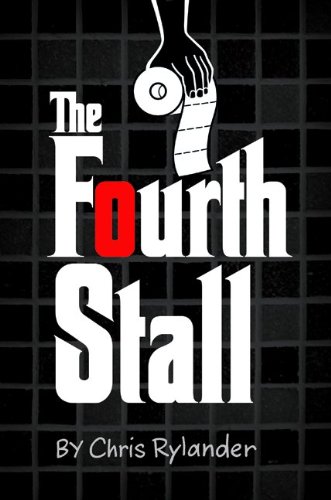 Chris Rylander has been called many things: the voice of the next generation, the Mario Puzo of children's literature, and, every once in a while, Chris or Christopher. In between unicorn hunts, he managed to write a book for kids. The Fourth Stall, summarized here, tells the story of...ah, just read the link...and comes out February 8.
I sat down with Chris on the veranda of his seaside manor in a beautiful fiefdom he's dubbed "North Dakota." After pointing and laughing at a few of his serfs, we got down to the interview.
Murphblog: I’ve seen the book described as “The Godfather for kids,” which begs the question, “Why didn’t I think of that?” What made you think of it and did you run into any problems that might explain why less courageous writers (like Nicholas Sparks) have been reluctant to bring the world of organized crime into children’s fiction?
Rylander: I don’t really have a concrete explanation as to where the idea came from. I guess I was just sitting there eating some frosting probably or something, and then I thought to myself how fun it might be to take organized crime and put a kid-friendly spin on it. There were some challenges, sure, like trying to walk the line between the right amount of violence and having the kids use severed horse heads as pillows and everything. But in the end, I always just asked myself this question: “Is there enough blood and gratuitous violence in this scene?” And if the answer was “no,” then I simply added more. And I think it turned out pretty well. One dead body per page is usually a pretty good rule for children’s books. No, but seriously it was a challenge to get that part just right - because I didn't want to soften it to the point where it was cheesy. But I also didn't want to glorify grade-school gang wars.
Murphblog: Your main characters, Vince and Mac, love the Chicago Cubs and save money to attend a World Series game. The back of the book states that you’re also a huge Cubs fan. Psychoanalyze the Cub fan. What kind of person puts himself through such misery and disappointment year after year?
Rylander: The sort of person who is the opposite of that one guy who always loves to point out how right he is all the time while simultaneously pretending he is only feigning pride but deep down we all know what a smug jerk he is despite the fact that basically everybody likes him anyway and you just can’t figure out why. Did that make sense? I hope not.
Me: Sticking with the Cubs, which of the following emotions best describes how you feel when you read the name Steve Bartman:

a. Hatred because he screwed the Cubs
b. Pity because of how abominably he was treated
c. Jealousy because he had such great seats
d. Other—please explain.
Rylander: – b. Pity because of how abominably he was treated. Bartman, if you’re out there reading this, contact me, I’ll send you a free copy of my book. Heck, I’ll even send you two if you can somehow get the Cubs back to the NLCS.
Me: In the book, Vince is fond of repeating the befuddling wisdom of his grandmother. One example is, “The only real way to eat a pinecone is with tortoise gravy and a sense of self-worth.” What’s the worst advice you could give to someone who’s trying to write a novel?
Rylander: I’d say to write out your novel by hand using a mixture of water and your own blood for ink. That way, when you send the manuscript to editors and agents to consider, you can also include a note that says, “There’s literally a little bit of me in every single page. Enjoy.” They’ll be delighted, and you’ll have a book deal in no time. That, and I also always like to remind people about the importance of wearing a bow tie when you write.

Me: Back to the Cubs. In the book, Vince and Mac try to stump each other with Cubs trivia. I have some Cubs trivia for you. No cheating.
Rylander: This is not fair.
a. Nevertheless. In what year did the Cubs play their first night game at Wrigley Field?
Rylander: I’m pretty sure it was in the late 1980’s… I’ll say 1987. The thing is, I black out most of the Cubs games I watch because they’re just too painful to remember. So I never remember the trivia and Cubs facts they talk about on air. Mac and Vince, however, are too young to have developed that protective crust of cynicism, so they soak it all up like sponges.
[Editor's Note: The first night game was on Aug. 9, 1988.]
b. Why did Keith Moreland wear eye black when it was cloudy?

Rylander: Keith who?
[Editor's note: This is an acceptable answer.]
c. The Cubs have gone over 45 years without being no-hit. Which Hall of Famer was the last to throw a no-hitter against them?
Rylander: I want to say it was probably Koufax or Gibson, but I think this is likely a trick question. You can’t fool me that easily. It was definitely Ebby Calvin "Nuke" LaLoosh. Either him or former president Teddy Roosevelt… Teddy could do just about anything. In 08/08/88, he once stopped a tornado with nothing but a yo-yo and a smile.
[Editor's Note: Koufax. Well done, Chris!]
Me: The villain of your book is a teenage gangster named Staples. What other office supplies would make good gangster names?
Rylander: I don’t know, I went through them all, and I think Staples is the best. I toyed with both Eraserhead and Tapehead, but those were both already taken. Pen15 seemed too juvenile. And Notebook Pants just didn’t have the same ring to it. But Pencil-Cup McCoy was a close second, I can’t lie.
Me: The story contains a plot twist concerning Mac and Vince. When you write, do you plan everything out first or just go where the story takes you and make the necessary changes later?
Rylander: A little of both. I don’t plan out very much at first, but then as I get further along I plan more and more. Although, I really have to give my agent and editor a lot of credit. They both really helped me to shape the final plot and make it all work. And while I’m at, I should probably thank that glass of orange juice I drank that one time for giving me the energy I needed to finish the book.
Me: The end of the book implies a sequel. Are you working on that now? What other projects do you have going?
Rylander: Yes, actually, I just finished the final draft of sequel. That should come out about a year from now. As for other projects, it’s more like what don’t I have going… So that’s how I’ll answer. Here are the only genres that I currently don’t have a project started in:
Me: Well, Chris, between hunting unicorns, avoiding sharks, upstaging Nicholas Sparks, lording over the fiefdom of "North Dakota," and writing in every genre, it sounds like you're keeping busy. Thanks for making some time for us.
Rylander: Thanks so much for all of the great questions, Murphblog! It was a lot of fun.
Friday, February 4, 2011
Fable: Robin and Bluebird

Robin and Bluebird
Robin and Bluebird spent the night sleeping in Farmer Johnson’s oak tree. The next morning, while it was still dark, Robin awoke, bright and chipper and full of as much vivacity as he always was.
“Tweet! Tweet!” he said to himself. “I’m up and at ‘em and ready to seize the day! And I sure am hungry!”
As quietly as he could, so as not to wake Bluebird, Robin lifted off his perch and flitted to the ground. He pecked at the soft earth and soon found a fat, juicy worm.
“You know what they say,” Robin said, “Breakfast is the most important meal of the day!” and he quickly gobbled up the worm.
He flew back into the tree with a full belly and an even more cheerful attitude.
“Tweet! Tweet!” he tweeted. “Wake up, Bluebird! It’s time to get up!”
Bluebird grunted and tried to ignore Robin.
“No, no,” Robin said. “It’s time to start your day. You’re a bird and you need to act like one. Birds wake up and tweet early in the morning.”
Bluebird mumbled, “Just let me sleep. I’m tired. I was out all night partying with Cockatiel.”
“Tweet! Tweet! You’d better get up. You know what they say: ‘The early bird gets the worm.’ If you don’t get up soon all the best ones will be gone!”
Bluebird cracked open an eye. “The sun’s not even out,” he grumbled.
“The earlier the better, that’s what I say,” said Robin, and he flew off to sit on a telephone wire.
Bluebird fell back to sleep, and without Robin there to pester him, didn’t wake up until almost noon. When he finally staggered off his bough, he dropped down onto Farmer Johnson’s property and soon dug up a small worm of his own. Contented, he flew back into the tree and sang a song.
The next morning, Robin was once again up before dawn.
“Tweet! Tweet!” he said to himself. “I’m up and at ‘em and ready to seize the day! And I sure am hungry!”
Robin flew down to the ground and had no trouble finding the fattest, juiciest, most succulent worm.
“Bluebird doesn’t know what he’s missing,” he said to himself.
But just before flying to his telephone wire he saw something out of the corner of his eye.
It was Farmer Johnson’s cat!
Robin tried to lift off the ground, but because he had spent his life waking up early to eat the largest worms, he was rather large himself and lacked the reflexes a leaner and more rested bird would have had.
Before he could get off the ground, the cat pounced on Robin and ate him.
By the time Bluebird finally got around to starting his day, the cat was back inside the house, asleep on Farmer Johnson’s couch, and Bluebird had no trouble finding a worm to his liking.
The moral of the story is: Getting up early is overrated.
Tuesday, February 1, 2011
Aesop, Revised
Sometimes I give assignments for no other purpose than my own amusement. Since we're studying fables, I can sort of justify this one, but mostly I just wanted a laugh and some blog material. I gave students some well known morals with their ends chopped off and asked them to finish them. The results:
Aesop: Don't count your chickens before they hatch.
Third Graders: Don't count your chickens before _____________.
eating them
breakfast
cutting them
they lay eggs
slicing their heads off with an axe
Aesop: Don't bite the hand that feeds you.
Third graders: Don't bite the hand that ______________.
helps you
smells bad
kills
is bloody
is strong
is already hurt
Aesop: He who has many friends has none.
Third graders: He who has many friends has ________________.
no money
not very good ones
lots of company
lots of help
Aesop: He who groans loudest is often the least hurt.
Third graders: He who groans loudest is often ____________.
nobody's friend
a baby
the man in the house
the boss
in trouble
in jail
ignored by others
Aesop: If you want a task done well, then do it yourself.
Third graders: If you want a task done well, then _____________.
you've got to do it right
ask questions
you have to pay someone
work harder
try again
do what you're good at
read the directions
Aesop: You can't please everybody.
Third graders: You can't please _____________.
my dad
a grumpy man
a donkey
mother nature
yourself or anyone else
Aesop: Quality is more important than quantity.
Third graders: Quality is more important than ___________.
other stuff
chicken wings
TV
Billy Ray Cyrus's hair
Aesop: Think twice before you act.
Third graders: Think twice before you _____________.
fight someone bigger than you
run in a busy road
die
do it (I don't think he meant this in the way I would probably mean it)
And some random ones:
A bird in the cage is worth two on a pogo stick.
Misery loves you and your family.
Misery loves her or his mommy.
A bird in the cage is worth two on a platter.
One good turn deserves a hug or pat on the back.
Aesop: Don't count your chickens before they hatch.
Third Graders: Don't count your chickens before _____________.
eating them
breakfast
cutting them
they lay eggs
slicing their heads off with an axe
Aesop: Don't bite the hand that feeds you.
Third graders: Don't bite the hand that ______________.
helps you
smells bad
kills
is bloody
is strong
is already hurt
Aesop: He who has many friends has none.
Third graders: He who has many friends has ________________.
no money
not very good ones
lots of company
lots of help
Aesop: He who groans loudest is often the least hurt.
Third graders: He who groans loudest is often ____________.
nobody's friend
a baby
the man in the house
the boss
in trouble
in jail
ignored by others
Aesop: If you want a task done well, then do it yourself.
Third graders: If you want a task done well, then _____________.
you've got to do it right
ask questions
you have to pay someone
work harder
try again
do what you're good at
read the directions
Aesop: You can't please everybody.
Third graders: You can't please _____________.
my dad
a grumpy man
a donkey
mother nature
yourself or anyone else
Aesop: Quality is more important than quantity.
Third graders: Quality is more important than ___________.
other stuff
chicken wings
TV
Billy Ray Cyrus's hair
Aesop: Think twice before you act.
Third graders: Think twice before you _____________.
fight someone bigger than you
run in a busy road
die
do it (I don't think he meant this in the way I would probably mean it)
And some random ones:
A bird in the cage is worth two on a pogo stick.
Misery loves you and your family.
Misery loves her or his mommy.
A bird in the cage is worth two on a platter.
One good turn deserves a hug or pat on the back.
Wednesday, January 5, 2011
Published!
My poem, "The Ride," appears on the back cover of the January/February issue of Jack and Jill Magazine. Got my cc's in the mail today, and I'd like to give credit to the editor who made the changes. The poem is better because of them. Also, the artwork is sweet. Well done, Gary LaCoste.
Tuesday, January 4, 2011
Third Grade Imagery
No, I'm not going to describe what was left in the toilet in my class bathroom this afternoon.
You're welcome.
I am going to share some examples of imagery my students came up with. Some context: I did a lesson on imagery today in which I defined it, read a book that contained a lot of it (This one), and then gave students some things to describe--Clouds, rain, snow. I got some good stuff, some cliche* stuff, and of course there was the clueless contingent. I'm sharing the good and the bad, but leaving out the cliche. You're not eight; you already know them.
The Good
The clouds looked like giant mashed potatoes.
The snow fell like baby powder.
The clouds looked like fluffy sour cream on a blue spoon.
I watched through the window as God melted icicles.
The snow was like a feather; you couldn't hear it at all.
The clouds were like little white boats in the ocean sky.
The snow was like whipped cream.
I looked out my window as a drizzle comes down, tiny water balloons crashing and breaking apart.
The rain fell like little liquid raisins.
The clouds were like fat blobs of cream cheese spread on a bagel. (Editor's note: Yum.)
The Clueless
I love how the clouds move.
I hate snow because it storms and that's why I don't like rain. (Editor's note: Swear to god that's what it says.)
I like snow. (Same kid.)
Rain makes rainbows.
Snow can get things wet.
Rain everywhere when it rains.
I love when it snows because we have snow days (me too!)
Snow is like hail, but softer.
And the Never Gonna Be a Poet Award goes to...
Snow is a weather. It is a weather in the winter because there is snowflakes. Snow is cold. Snow is dangerous because you might slip on the ice and fall on the ice.
*If you'd like a lesson in futility (and humility) try teaching third graders what cliches are. It is, by definition, almost impossible. Nothing is overused to them--they're eight! You wouldn't believe how many kids think "He ran faster than a deer" is the height of originality.
You're welcome.
I am going to share some examples of imagery my students came up with. Some context: I did a lesson on imagery today in which I defined it, read a book that contained a lot of it (This one), and then gave students some things to describe--Clouds, rain, snow. I got some good stuff, some cliche* stuff, and of course there was the clueless contingent. I'm sharing the good and the bad, but leaving out the cliche. You're not eight; you already know them.
The Good
The clouds looked like giant mashed potatoes.
The snow fell like baby powder.
The clouds looked like fluffy sour cream on a blue spoon.
I watched through the window as God melted icicles.
The snow was like a feather; you couldn't hear it at all.
The clouds were like little white boats in the ocean sky.
The snow was like whipped cream.
I looked out my window as a drizzle comes down, tiny water balloons crashing and breaking apart.
The rain fell like little liquid raisins.
The clouds were like fat blobs of cream cheese spread on a bagel. (Editor's note: Yum.)
The Clueless
I love how the clouds move.
I hate snow because it storms and that's why I don't like rain. (Editor's note: Swear to god that's what it says.)
I like snow. (Same kid.)
Rain makes rainbows.
Snow can get things wet.
Rain everywhere when it rains.
I love when it snows because we have snow days (me too!)
Snow is like hail, but softer.
And the Never Gonna Be a Poet Award goes to...
Snow is a weather. It is a weather in the winter because there is snowflakes. Snow is cold. Snow is dangerous because you might slip on the ice and fall on the ice.
*If you'd like a lesson in futility (and humility) try teaching third graders what cliches are. It is, by definition, almost impossible. Nothing is overused to them--they're eight! You wouldn't believe how many kids think "He ran faster than a deer" is the height of originality.
Books Read In 2010
This one's for my own records. 78 books, a little short of last year's mark. I hit a dry spell in late summer.
- The Girl Who Kicked the Hornets' Nest
- Monsters of Men
- Behemoth
- The Fourth Stall
- Harry Potter and the Sorcerer's Stone
- The Curse of the Wendigo
- Squirrel Seeks Chipmunk
- The Danger Box
- The Mysteries of Pittsburgh
- Full Dark, No Stars
- A Slobbering Love Affair
- The Strange Case of Origami Yoda
- The Amazing Adventures of Kavalier and Clay
- The Big Short
- Brixton Brothers: The Ghostwriter Secret
- The Giver
- Jack Blank and the Imagine Nation
- Mockingjay
- Fat Vampire
- The Girl Who Played With Fire
- The London Eye Mystery
- Odd and the Frost Giants
- The Girl With the Dragon Tattoo
- Rooster
- The Boy Who Couldn't Sleep and Never Had To
- The Card
- I Hope They Serve Beer in Hell
- Jasper Dash and the Flame-Pits of Delaware
- Theodore Boone: Kid Lawyer
- Sh*t My Dad Says
- The Eyre Affair
- Talonshale
- Dull Boy
- The Clue of the Linoleum Lederhosen
- Holdup
- Pirate Latitudes
- The Ask and the Answer
- The Deathday Letter
- The Morgue and Me
- The Knife of Never Letting Go
- Leviathan
- Neil Armstrong is My Uncle and Other Lies Muscle Man McGinty Told Me
- The Lightning Thief
- Will Grayson, Will Grayson
- Lawn Boy
- The Dark Days of Hamburger Halpin
- Liar
- The Last Summer of the Death Warriors
- The Miraculous Journey of Edward Tulane
- A Year Down Yonder
- A Long Way From Chicago
- Son of the Mob
- The Monstrumologist
- No Talking
- Clementine's Letter
- Going Bovine
- Diary of a Wimpy Kid: Dog Days
- Zoobreak
- The Case of the Case of Mistaken Identity
- Sir Fartsalot Hunts the Booger
- Castration Celebration
- The Phantom Tollbooth
- The Talented Clementine
- The Year the Swallows Came Early
- Mr. Paradise
- Plot and Structure
- The Forest of Hands and Teeth
- Doc Wilde and the Frogs of Doom
- I Am a Genius of Unspeakable Evil and I Want to Be Your Class President.
- Nick and Norah's Infinite Playlist
- Under the Dome
- Superfreakonomics
- Drums, Girls, and Dangerous Pie
- Half Broke Horses
- King of the Screwups
- Looking For Alaska
- The Book Whisperer
- The Lost Symbol
Thursday, December 30, 2010
It Snowed in New York
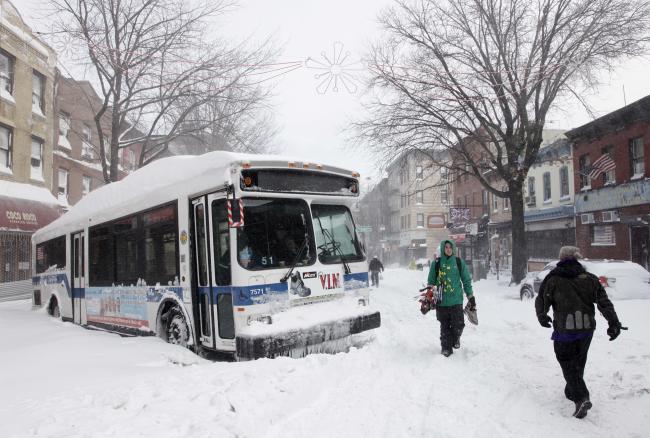 I'm sure you haven't heard.
I have some strong feelings on the snow, or, mainly New Yorkers' whiny response to it. First, judging by the breathless coverage on the news you'd think all of the following:
1. It had never snowed in New York before.
2. New York snow is thicker, heavier, slipperier, and generally more problematic than snow in the rest of the country.
3. There might be a rest of the country, but it's not all that important what happens there, unless what happens there somehow demonstrates that the people who live in that part of the country (which, lest you forget, is not New York) are less civilized than those who live in New York. Like that crazy pastor who wanted to burn the Korans.
Now I'm going to admit something that I shouldn't. It gratifies me that a bunch of New Yorkers are stuck in the snow. It makes me happy that these folks who so casually deride rural living are now trapped by the urban congestion they profess to love. I laugh at the folly of their narrow streets, at the fickleness of their public transportation system, at their lack of wide open parking spaces. It makes me smile to know that we hicks who live in the middle of the country, if we don't have one ourselves, know somebody who can attach a plow to the front of their gas guzzling pick-up truck and plow their own damn road. It pleases me to think that these sophisticated people, who willingly pay exorbitant taxes for the privilege of living in the "greatest city in the world" are suddenly left in the lurch when their precious government can't compete with nature. I chortle in glee as I picture the stranded car waiting to be freed by the disgruntled plow driver.
Perhaps now, more than five years after Hurricane Katrina, people will finally begin to realize that no matter how much faith we put in government, there are things for which it will be woefully overmatched. Maybe now, with self-important New Yorkers blaming their mayor for an inadequate response, we'll finally admit that no matter how often government promises to take care of us, the reality is we better, when the shit hits the fan, be prepared to take care of ourselves. Maybe now, now that their self-assured, smug, condescending attitudes have been covered in a little snow, they'll realize that the New York way isn't the only way. That there are people out here in the great middle whose ideas aren't stuck in the past and whose way of life deserves a little more than the supercilious scorn usually reserved for it by the self-appointed elite.
But probably not.
I've Been Kindled
 This is me reading my Kindle. I love it like whoa. I was sort of an anti-ereader person last year but the more I had to wait for a title to free up at the library, and the more my house got stuffed with books, and the more I looked at the economics, the more it made sense to ask for a Kindle. The Wife got it for me for Christmas. I'm reading The Girl Who Kicked the Hornets' Nest on it right now (which sucks, by the way), and that leads me to a story...
When I purchased that book (with an Amazon gift card, bang!) The Wife was jealous because she wanted to read it and there was pretty much no way I was going to just give her my Kindle for three days or whatever. But then we had another Christmas to attend--The Wife's side. And at that Christmas, my mother-in-law presented The Wife and I with one of those It's For Both of You presents. I let The Wife open it because I'm chivalrous. We were warned:
"Now, if you don't want this, I'll buy it back from you," Mother-in-law said. I was intrigued.
The Wife opened it and it was...(you already know, don't you, you anticipatory reader)...a Kindle!
Mother-in-law was apologetic because she'd found out a day or two before that The Wife had already given me one, so she felt bad that I hadn't gotten a gift. I quickly corrected her. I had been given a gift, and it was the greatest gift of all--the gift of not having to share.
Now, there are two things I'd like to share (see what I did there?), one of which wouldn't be possible (or at least very difficult to do) without a Kindle. If you've read The Girl With the Dragon Tattoo or any of the subsequent books, you know that the author is (was?), for some reason, obsessed with telling the reader exactly what his characters eat. If I've learned anything about Sweden it's that they eat a lot of sandwiches and drink a lot of coffee. They drink coffee so often that I was curious just how many times the word "coffee" appeared in the third installment of the series. So I used the search function and discovered that there are 103 uses of the word in the book. The book, in its paper form, is about 600 pages, which means that, on average, coffee is explicitly mentioned every sixth page. Here's an idea: how about having someone drink a Coke?
Also, you can browse the Kindle Store and search for titles and whatnot, just like on the Net. So, for research purposes, I looked up books on "psi"( paranormal ability and the like). I got a bunch of books and I clicked on a few and I found this gem, summarized thus:
Chronicles of Psi – Book I – A New Beginning
In a world that has reinvented itself from the ashes of a ruined civilization comes a child of The Foretelling who must find his way to save mankind from further destruction. Along his way the forces of his world conspire against him to destroy him or gain the power he wields for their own selfish purposes. He must learn his destiny and how to use his gift before the world is ravaged and destroyed yet again.
A young girl, trained as an assassin, is commissioned to protect the boy, yet finds herself embroiled in this war of politics and subtlety even as she leaves her guild training grounds. Her greatest challenge lie in finding him in time before the others seeking to destroy him do.
This story begins the saga of the Chronicles of Psi, where the rare gift of psionics or mind powers called “Psi” are used by human and creatures alike to the benefit or destruction of those around them. This post apocalyptic world is filled with terrible creatures and forces struggling for power over the world.
Favorite parts:
1. The whole first sentence, which almost makes a little sense. Also, what good is "The Foretelling" if it failed to stop the destruction of the world the first time? Are we just supposed to not care about the first mankind? You know, the one that was totally wiped out before this foretold child showed up after the fact?
2. I like how the "forces of his world" are unsure whether they want to kill him or steal his powers. Nothing like indecisive forces.
3. Who commissions an assassin to protect somebody? Does the commissioner value irony over success? Maybe this world should be wiped out too.
4. What does a "war of subtlety" look like? Do people raise their eyebrows cryptically at one another until someone gives up in confusion?
5. If the assassin's "greatest challenge" is in finding the kid, then what's the point of sending an assassin? Why not send someone who's really good at hide and seek?
6. Psychic powers can apparently be used for good or evil. Huh. Who knew?
And a bonus for the new year: Glamour shot!!!

Are you entranced by my beguiling gaze?
Thursday, December 23, 2010
Poetry and Christmas Gifts Go Together Like Chocolate and Milk
Here's the poem I attached to the Yankee Swap present that I took to today's Christmas gathering:
"Shit You Sometimes Need"
If you want a sexy gift
then this one's not for you.
It will not make your car shine
it doesn't make fondue.
There are no gift cards in this box,
no wine or Lotto tickets.
Once it's open the response we'll hear
will probably resemble crickets.
These are things you hate to buy
so please, do not get peeved.
If you're a girl or a guy
it's shit you sometimes need.
So if you hate it, pack it up
Put it right back in the box.
And just be glad you didn't get
six pairs of argyle socks.
You might regret the choice you made
it may remind you of what's in your colon.
But like Jesus's birth, miracles happen
and your gift could still get stolen.
Because even at Christmas, I'm all about fecal references.
If you want a sexy gift
then this one's not for you.
It will not make your car shine
it doesn't make fondue.
There are no gift cards in this box,
no wine or Lotto tickets.
Once it's open the response we'll hear
will probably resemble crickets.
These are things you hate to buy
so please, do not get peeved.
If you're a girl or a guy
it's shit you sometimes need.
So if you hate it, pack it up
Put it right back in the box.
And just be glad you didn't get
six pairs of argyle socks.
You might regret the choice you made
it may remind you of what's in your colon.
But like Jesus's birth, miracles happen
and your gift could still get stolen.
Because even at Christmas, I'm all about fecal references.
Tuesday, December 14, 2010
Vonnegut's Creative Writing 101
From the introduction to his book of short stories, Bagombo Snuff Box:
1. Use the time of a total stranger in such a way that he or she will not feel the time was wasted.
2. Give the reader at least one character he or she can root for.
3. Every character should want something, even if it is only a glass of water.
4. Every sentence must do one of two things--reveal character or advance the action.
5. Start as close to the end as possible.
6. Be a sadist. No matter how sweet and innocent your leading characters, make awful things happen to them--in order that the reader may see what they are made of.
7. Write to please just one person. If you open a window and make love to the world, so to speak, your story will get pneumonia.
8. Give your readers as much information as possible as soon as possible. To heck with suspense. Readers should have such complete understanding of what is going on, where and why, that they could finish the story themselves, should cockroaches eat the last few pages.
He then says great writers tend to break all the rules except the first one.
1. Use the time of a total stranger in such a way that he or she will not feel the time was wasted.
2. Give the reader at least one character he or she can root for.
3. Every character should want something, even if it is only a glass of water.
4. Every sentence must do one of two things--reveal character or advance the action.
5. Start as close to the end as possible.
6. Be a sadist. No matter how sweet and innocent your leading characters, make awful things happen to them--in order that the reader may see what they are made of.
7. Write to please just one person. If you open a window and make love to the world, so to speak, your story will get pneumonia.
8. Give your readers as much information as possible as soon as possible. To heck with suspense. Readers should have such complete understanding of what is going on, where and why, that they could finish the story themselves, should cockroaches eat the last few pages.
He then says great writers tend to break all the rules except the first one.
Friday, December 10, 2010
The Goose and the Golden Eggs
The Goose and the Golden Eggs
The farmer was poor. Grain prices had fallen precipitously. He didn’t have the heart to slaughter his cows. Cows were so peaceful. How could you kill something that lowed? It didn’t particularly bother the farmer that he was poor. He was a man of few needs. His wife, however, dreamed of fancy cars and sparkly jewelry and other things that would make her friends jealous. She had grown tired of being pitied by those in her social circle and although she respected the farmer for his honesty she told him one day, “If you don’t start making some money, I’m leaving you.”
Although she was harsh and honest to a fault, the farmer liked the idea of having a happy wife. He began to brainstorm ways he could make more money. He’d once had an idea for a game show, but he wasn’t sure how one went about having television shows made. And he’d heard on the radio in his truck a story about a man who made millions by placing tiny ads in newspapers, but he was skeptical. A solution did not immediately present itself, so the farmer went where he always went when he wanted to do some serious thinking. He went to the barn.
In addition to the cows, the farmer owned a goose. The goose was old and while it still provided the occasional egg, the farmer mostly kept it around because it seemed to be a good listener. While the farmer talked, the goose would emit an occasional honk that, to the believing ear, seemed to be pitched in way that simulated conversation.
“I’ve got a problem, goose,” the farmer said.
The goose honked plaintively, as though affirming something it already knew.
“My lady’s fixing to leave me unless I can scrap together enough money to get her something fancy. She likes fancy things, she does.”
The goose honked: “I know she does.”
“I been trying to think of something but I just can’t. Guess I’m a little outta practice. Only thing I know is farming and farming don’t make a man or his woman rich.”
Honk, once again, in agreement.
“Ah, well. I’m sure I’ll come up with something. Life tends to work out, you know,” the farmer said.
Honk: “It does indeed.”
When the farmer went to the barn the next morning to do his chores, he noticed something shiny lying on the straw next to the goose. It was the size and shape of an egg, but as the farmer came closer he knew that an egg it could not be. It was shining like the sun. He went to lift the object but was surprised at its weight. It was much heavier than any egg should be.
“What have you got here, goose?” the farmer said.
The goose only blinked at him.
The farmer, knowing nothing of fancy things, took it inside to show to his wife. “Look what I found in the barn,” he said.
The wife handled the egg. She turned it this way and that. She smelled it. She scratched it with her nail. Flakes of gold fell off. The wife looked accusingly at the farmer. “Where did you say you got this?” she asked.
“The barn. It was next to the goose.”
“That old, worthless thing?” the wife said.
“The very.”
The wife huffed. She dropped the golden egg on the table and stood up. “You take this egg right back where you got it,” she said. “I see what you’ve done. You’ll get us both thrown in the clink.”
“But…but,” the farmer stammered. He took the egg back to the goose.
Life went on in the normal manner for some time until one day the wife came home furious. “Guess where Mildred’s going next week?” she asked the farmer. “Vegas. Mildred’s going to Vegas for a vacation. Know where I’m going on vacation? That’s right. Nowhere. I’m going nowhere while Mildred’s going to Vegas. I’ve had it up to here!”
The farmer didn’t see what was so special about Vegas, but he thought it was his role to please his wife so he went to talk to the goose. “Hey, have you still got that golden egg?” he asked.
Honk. It sounded like a yes to the farmer. After some searching through the straw he found the egg. He took it into town and traded it for a plane ticket to Vegas. When he got home, he handed his wife an envelope. She looked at it dubiously.
“Go ahead, open it,” the farmer said.
She slid a nail along its back and pulled out the plane ticket. But instead of the surprise the farmer expected to see, his wife’s eyes flashed anger. “Don’t think I don’t see what you’ve done here. You never took that egg back like I said. The cops will be here any second, I reckon.”
“But the goose laid it!” the farmer said. “The next time it lays one I’ll take you out to the barn and show you.”
His wife sniffed. “As if I’m stepping foot in that filthy shack,” she said. She tore the ticket up and dropped it into the wastepaper basket.
The next day the goose laid another golden egg. “Come on,” the farmer told his wife. “You’ve got to come see. It’s laid a second golden egg.”
Reluctantly, the farmer’s wife followed him into the barn. There, shining brilliantly next to the goose, lay a golden egg, even larger than the last. The farmer’s wife lifted it and turned a baleful glance on the farmer. “Do you think I’m a fool?” she said. “You’re stealing these eggs from some nice rich family and pretending this goose here lays them. That’s the dumbest cover story I’ve ever heard and I know just how to put an end to your nonsense.”
She went to the wall where the farmer hung his tools and drew his scythe from a hook. She used it to slice the head clean off the goose. After that there were no more golden eggs, and the wife, claiming she couldn’t live with a man she couldn’t respect (“you could have at least made up a believable story,” she scolded), left him. She married a young man whose father had become wealthy by creating a popular game show. The farmer lived alone in poverty. And they both lived happily ever after.
Tuesday, December 7, 2010
Roosevelt's Revisions
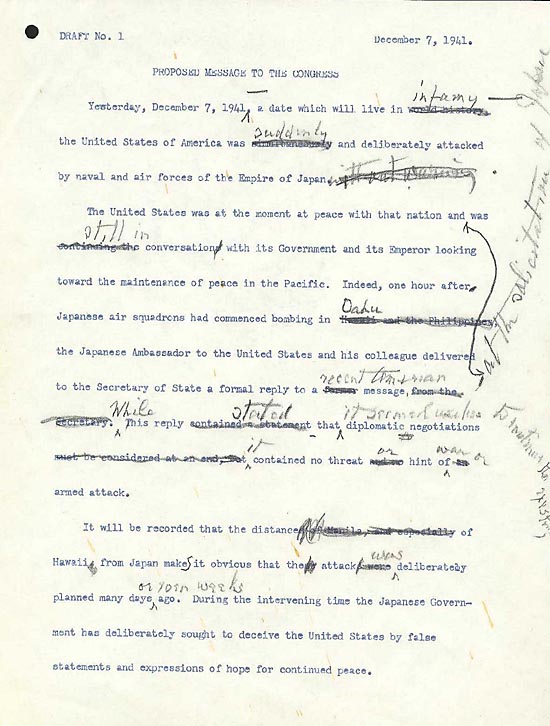
In the course of boning up (funny phrase that) on my Pearl Harbor history, I ran across President Roosevelt's revised draft of his famous infamy speech. Interesting to think about the choices he made as a writer. I share my thoughts below the document (which you can click to enlarge).

Most interesting is that Roosevelt's famous "a date which will live in infamy" line was originally "a date which will live in world history." Let this be a lesson on word choice. Other changes of note:
"suddenly" attacked instead of "simultaneously" attacked, which changed the focus of the sentence from being attacked by both Japan's navy and air force to the fact that it was a dirty sneak attack. Also, in this same sentence, FDR added "without warning" to the end of the sentence before realizing that "suddenly" essentially said the same thing and he struck it to avoid redundancy.
I also found it interesting how FDR changed "Hawaii and the Philippines" to "Oahu" as the place that was attacked. It's more specific and it removes the Philippines, which, let's face it, Americans wouldn't be nearly as willing to fight for. Later in the speech, other references to the attack on Manila were removed and "attacks" became singular. Indeed, that Japan attacked the Philippines on this date has largely been forgotten by history, thanks largely to Roosevelt's address. "Oahu" delivers a better punch, and it's obvious in the speech that Roosevelt is appealing to Americans' anger in his justification for war.
Later, Roosevelt, well ahead of Strunk and White, substitutes one word ("states") for three ("contained a statement").
Lastly, the beginning of the speech is intentionally written in the passive voice. As the Wikipedia article states
Most interesting is that Roosevelt's famous "a date which will live in infamy" line was originally "a date which will live in world history." Let this be a lesson on word choice. Other changes of note:
"suddenly" attacked instead of "simultaneously" attacked, which changed the focus of the sentence from being attacked by both Japan's navy and air force to the fact that it was a dirty sneak attack. Also, in this same sentence, FDR added "without warning" to the end of the sentence before realizing that "suddenly" essentially said the same thing and he struck it to avoid redundancy.
I also found it interesting how FDR changed "Hawaii and the Philippines" to "Oahu" as the place that was attacked. It's more specific and it removes the Philippines, which, let's face it, Americans wouldn't be nearly as willing to fight for. Later in the speech, other references to the attack on Manila were removed and "attacks" became singular. Indeed, that Japan attacked the Philippines on this date has largely been forgotten by history, thanks largely to Roosevelt's address. "Oahu" delivers a better punch, and it's obvious in the speech that Roosevelt is appealing to Americans' anger in his justification for war.
Later, Roosevelt, well ahead of Strunk and White, substitutes one word ("states") for three ("contained a statement").
Lastly, the beginning of the speech is intentionally written in the passive voice. As the Wikipedia article states
The wording was deliberately passive. Rather than taking the more usual active voice—i.e. "Japan attacked the United States"—Roosevelt chose to put in the foreground the object being acted upon, namely the United States, to emphasize America's status as a victim. The theme of "innocence violated" was further reinforced by Roosevelt's recounting of the ongoing diplomatic negotiations with Japan, which the president characterized as having been pursued cynically and dishonestly by the Japanese government while it was secretly preparing for war against the United States.
Wednesday, November 24, 2010
I Went to the Dentist Today
 Your first question is why. It's a fair question, one I asked myself about ten minutes into the ordeal. One answer is guilt. When it gets to be four years between appointments you start to worry that there might be something going on in there that you should know about. Like oral cancer. Which brings me to the real reason I went: fear. Specifically, fear of death and of spending a great deal of money all at once. Fear is a fine motivator. And the logical part of my brain said something like, "You know, Murph, the longer you put off going, the greater the possibility that whatever problems you do have in there are going to get worse. And that means it's going to cost a lot more to fix them, or it might be too late for you to fix them at all and then you'll die. So maybe you should go."
I went. Sometimes I listen to myself.
I had to have x-rays. You'd think this would be the easy part. I did too. But I have a really bad gag reflex. Whenever anyone tries to jam something down my throat that isn't designed to go down my throat, I gag. Crazy, I know. So the dental hygienist almost got barfed on. Three times.
That over and the vomit remaining in my stomach, she proceeded to show me my hard-earned x-ray results. They were surprisingly good. I was expecting the news to be something like, "You have oral cancer," or "we need to pull some teeth," or "you need a few root canals," so when she said, "See these pointy, shard-like things here and here and here and here and here? That's tartar."
Tartar? I laugh at tartar. I mock it in my dreams. I make fun of its spelling and mispronounce it on purpose. Tar-tar.
"We'll do a cleaning today and then another in a few weeks."
Say what? I have to come back? Because of tar-tar? But how can this be?
She started cleaning. I've cleaned things before (The wife may disagree , but really, I have). I've cleaned dishes (okay, not very often), and I've cleaned my car. I've cleaned our hot tub (once) and I clean myself nearly every day. The act usually involves water, some soap, and maybe some gentle scrubbing. This lady obviously had a different understanding of the term. Because never have I "cleaned" something by taking a metal prong and scraping the holy hell out of it for forty minutes. That's not cleaning, that's abuse, brother.
When she was finally done torturing me (I gave up nothing!), the dentist came in. As far as I can tell, the hygienist does all the work and the dentist counts the teeth. I think I could be a dentist. He counted, said some stuff I didn't understand (he's Asian), and then the hygienist said I was going to have to have two cavities filled.
Cavities? There had been no mention of cavities. I almost threw up three times and they couldn't tell I had cavities until the dentist counted my teeth with his bare eyes and a little pointy thing?
So I made the second appointment. It's over Christmas vacation. And I learned some lessons:
Lessons Learned:
1. It's better to be a dentist than a dental hygienist. Unless you're a sadist or can't count.
2. Don't make fun of tartar. It will have its revenge.
3. Cleaning teeth is not the same as cleaning other things. It hurts more.
4. X-rays are nothing compared to the discerning eye of a good dentist.
5. Going to the dentist sucks. Actually, I already knew that. So consider this one a lesson reaffirmed.
Tuesday, November 23, 2010
A Poem (Metaphor Included Free of Charge!)
Anita was bored, and since she's just about the only reader left, I should probably make her happy. Here's a poem I wrote (and got published, but they didn't pay me) a couple years ago:
Tombstone
By
Paul Murphy
There’s a stone at the edge of the graveyard
It isn’t much to see.
There’s a taller one to the left of it
that looks more important to me.
But mom never seems to notice
that its shadow falls on her face
when she kneels on the ground
and touches the name
of the person who rests in this place.
Note: Is it really that hard for programmers to make it so Blogger will accept my cut and paste from Word? These geeks invented phones that can accept credit cards but they can't reconcile formatting differences?
Tuesday, November 16, 2010
What I'm Revising: Qualifiers
Here's where I pretend I know what I'm doing and give writing advice. Something I've noticed about strong writing is a lack of what I'll call here "qualifiers." (If you know a better term then please supply it.)
Strong writers know what they're talking about and have confidence in their descriptions. Instead of writing, It felt a little like the short, disorienting fugue she sometimes got when sleeping over at a friend's house, the strong writer will authoritatively state, It felt like the short, disorienting fugue she got when sleeping over at a friend's.
Phrases and words like "a little," "sort of," "kind of," "about," "nearly," "sometimes," "like," and many others show weakness. Just say it and stick with it. Even the most discerning reader won't take offense to the mild inaccuracy of the revised sentence above. Sure, the girl probably doesn't always feel disoriented when she sleeps in a strange bed, but it's better to err on the side of conviction than to signal to your readers that even you believe the idea of description is weak.
Strong writers know what they're talking about and have confidence in their descriptions. Instead of writing, It felt a little like the short, disorienting fugue she sometimes got when sleeping over at a friend's house, the strong writer will authoritatively state, It felt like the short, disorienting fugue she got when sleeping over at a friend's.
Phrases and words like "a little," "sort of," "kind of," "about," "nearly," "sometimes," "like," and many others show weakness. Just say it and stick with it. Even the most discerning reader won't take offense to the mild inaccuracy of the revised sentence above. Sure, the girl probably doesn't always feel disoriented when she sleeps in a strange bed, but it's better to err on the side of conviction than to signal to your readers that even you believe the idea of description is weak.
Subscribe to:
Posts (Atom)